
It’s tempting to wash, chop, and marinate everything the moment groceries reach your kitchen.
The fridge looks organized, dinner seems halfway done, and the week feels under control.
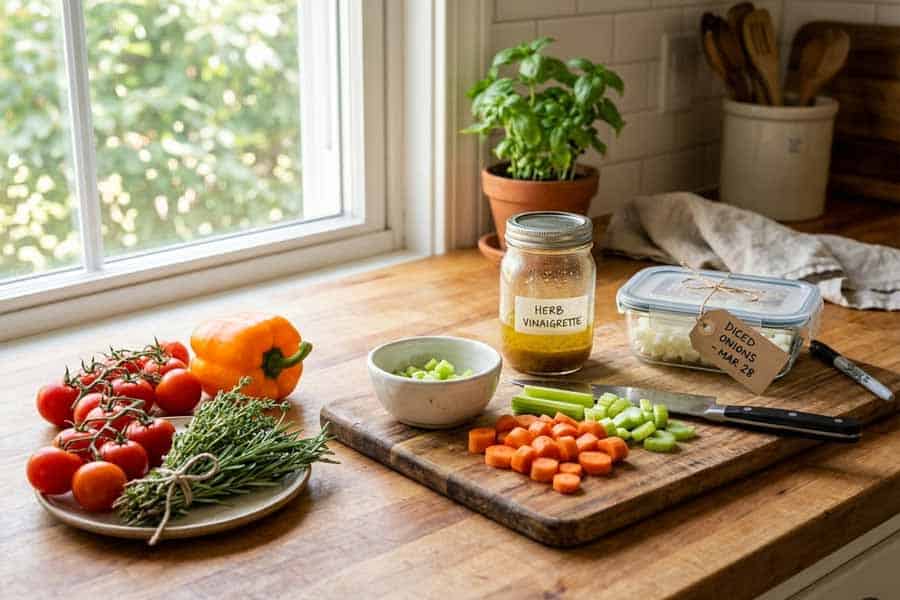
Then the herbs wilt, the berries soften, and the chopped vegetables lose their snap before you’re ready to cook them.
Good meal prep isn’t about handling every ingredient in advance.
It’s about knowing which foods benefit from early attention and which stay fresher when left alone.
A little planning can help you decide what to wash, cut, cook, refrigerate, or freeze without turning grocery day into an exhausting kitchen project.
Plan the Week Before You Pick Up a Knife
Start with the meals you’re actually likely to cook, not an ambitious seven-day schedule you may abandon by Tuesday.
Sort your groceries into three loose groups: ingredients needed within the next day or two, foods intended for later in the week, and anything that should go directly into the freezer.
This takes only a few minutes, but it prevents a lot of unnecessary prep.
Chop onions if tomorrow’s soup is already planned.
Cook a grain when it will appear in several meals.
Roast vegetables if you know they’ll become a side dish, bowl topping, or filling for wraps.
When an ingredient has no clear purpose yet, leave it whole.
A bell pepper can still become part of a salad, pasta dish, or tray of roasted vegetables.
Once it’s been sliced, the clock on its best texture starts moving faster.
Your plan should also protect the ingredients that bring freshness and contrast to a dish.
Keep crisp greens, raw vegetables, and delicate garnishes separate from cooked or sauced components until you’re ready to serve them.
The Ingredients Worth Prepping Early
Some foods handle advance preparation really well and become more useful once the initial work is done.
Sturdy vegetables are usually the easiest place to begin.
Carrots, celery, cabbage, broccoli, cauliflower, green beans, and winter squash can often be washed and cut ahead without losing their character right away.
I’d keep the pieces fairly large when possible, since finely chopped vegetables tend to dry out or soften more quickly.
You can also roast a tray of firm vegetables to carry through several meals.
Serve them beside a protein one evening, fold them into a grain bowl the next day, or blend them into soup when they start to lose their edges.
Cooked grains, beans, and lentils are similarly versatile.
A pot of rice, quinoa, barley, or lentils can support salads, soups, bowls, and quick side dishes throughout the week.
I always keep the seasoning simple when I’m planning to use a batch across meals with different flavor profiles.
Sauces and dressings are another smart make-ahead choice.
Vinaigrettes, tahini dressings, pesto, and chimichurri often save more time than chopping every vegetable in advance.
Store them separately so your salads stay crisp and roasted ingredients don’t get soggy.
Cooked proteins can be prepared ahead as well, particularly when they’ll show up in several different dishes.
Roast chicken might become dinner, sandwiches, and tacos.
Cooked tofu can move between bowls, stir-fries, and salads without missing a beat.
Food safety matters more than waiting for everything to cool down completely.
Divide cooked food into smaller, shallow containers and get it into the refrigerator within two hours.
Hot food can go straight into the fridge, and smaller portions will cool much faster than one deep container.
What Usually Keeps Better Whole
Advance prep has its limits.
Cutting food exposes more of it to air and moisture, which can affect texture, color, and overall quality.
For delicate ingredients, I’ve found that waiting is almost always the smarter call.
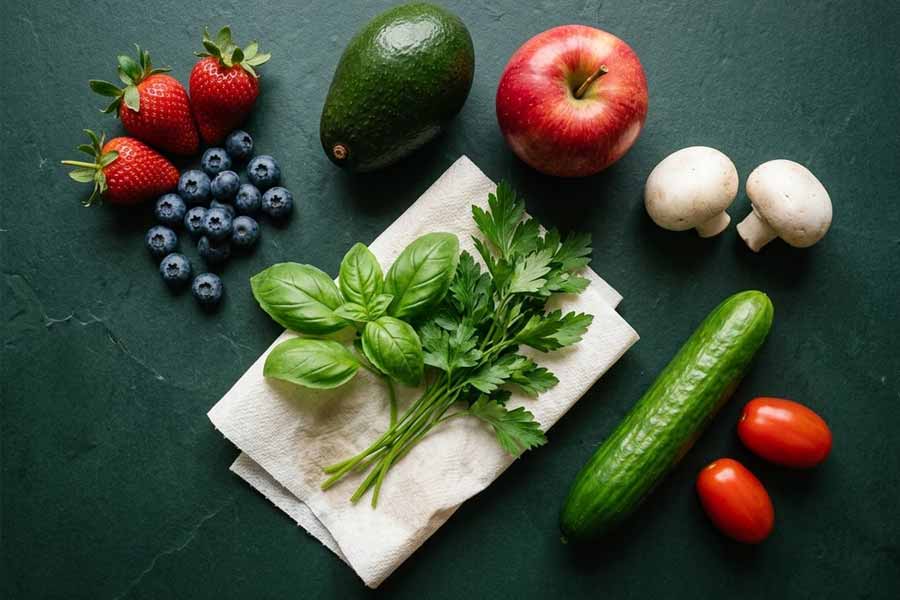
Berries and soft fruit generally do best with minimal handling.
Sort through them when you get home and remove anything damaged, but keep the rest dry until you’re ready to eat them.
Washing only what you need reduces the chance of extra moisture collecting during storage.
Leafy herbs and salad greens also need gentle treatment.
Keep them dry, remove any wilted leaves, and store them with a paper towel to absorb stray moisture.
Chopping an entire bunch of herbs at once might save a few minutes up front, but the cut edges can darken and lose their freshness before the end of the week.
Mushrooms, cucumbers, and tomatoes are usually best sliced close to serving time.
Cut mushrooms can become damp or discolored, cucumbers gradually lose their crunch, and tomatoes release juice that can make your prepared dishes watery.
Apples, avocados, and potatoes also change after cutting.
Their surfaces can brown when exposed to air, even when the food itself is still perfectly safe to eat.
Preparing them shortly before cooking or serving almost always gives you the best result.
Proteins deserve a more thoughtful approach.
Some cuts of meat benefit from advance salting or marinating, but delicate seafood can change texture when left too long in an acidic mixture.
I’ll often prepare the marinade early if that helps my schedule, then add the fish closer to cooking time.
Raw meat, poultry, and seafood should always marinate in the refrigerator and never on the counter.
Leaving an ingredient whole doesn’t mean forgetting about it.
Check your produce for damage, keep older items visible, and arrange your fridge so what needs to be used first is right at the front.
Refrigerate or Freeze: Make the Decision Early
One of the most useful meal prep habits I’ve picked up is being honest about when an ingredient is unlikely to be cooked soon.
Don’t wait until meat, bread, cooked grains, or prepared food is nearly past its prime before thinking about the freezer.
Freezing food while it’s still in good condition gives you a much better result when you eventually thaw and cook it.
Portion food according to how you’ll actually use it.
Divide chicken into dinner-sized amounts, freeze cooked grains in thin flat packages, and store sauces in small quantities that can be thawed on their own.
Soups and stews belong in sturdy containers with a little room for expansion.
The container should suit the food you’re storing.
Rigid boxes protect delicate meals and hold liquids securely.
Flexible bags work well for flatter portions that can be stacked or stored upright.
Small jars or containers are great for sauces, pastes, and concentrated ingredients.
Keeping a practical mix of containers, labels, freezer bags, and vacuum storage essentials nearby makes it easier to choose the right method for each ingredient instead of forcing everything into the same storage system.
Vacuum sealing can help limit air exposure, but it doesn’t replace proper refrigeration or freezing.
Perishable food still needs to stay at a safe temperature regardless.
Label each package with the food, quantity, and date.
That one small step keeps your freezer from turning into a collection of mystery parcels and makes future meal planning so much easier.
Give the Fridge a Midweek Reset
Even a solid plan can unravel when meetings run late, someone eats out, or leftovers stretch further than you expected.
I find it really helpful to set aside five or ten minutes around the middle of the week to check the refrigerator, freezer, and produce drawer.
Look for cooked dishes that should be eaten soon, vegetables beginning to soften, and ingredients that have slipped behind larger containers.
Move older food to the front, then make one quick decision for each item: use it, repurpose it, or freeze it.
Roast chicken can become tacos, soup, or a grain bowl.
A small amount of cooked rice can form the base of a great fried rice.
Roasted vegetables can be folded into pasta, added to a frittata, or blended into a sauce.
This is also the moment to adjust your original plan.
When you skip a meal, don’t leave its ingredients waiting around indefinitely.
Freeze an untouched portion while it’s still in good shape or move it into the next available dinner.
A short note on the fridge can really help.
List two or three items that need attention before the weekend.
The reminder is simple, visible, and honestly more useful than a complicated inventory system.
Build a Routine You’ll Actually Repeat
The best prep routine isn’t the most impressive one.
It’s the one that still feels manageable during a genuinely busy week.
Before handling each ingredient, I ask myself four questions:
- When will I realistically use it?
- Will preparing it now save time without hurting its quality?
- Would it stay fresher if I left it whole?
- Should I freeze a portion before it gets forgotten?
Your answers will shift with the season, your household, and your schedule.
During a demanding week, cooking grains and a protein may be more than enough.
When several meals will be eaten away from home, preparing fewer portions just makes more sense.
Keep the routine flexible.
Chop the carrots for tomorrow’s stew, but leave the berries dry for the weekend.
Make the dressing now, but wait to toss the salad.
Freeze the extra chicken, but keep the peppers whole until you know where they belong.
Prep with Restraint, Not Ambition
A well-managed kitchen isn’t one where every ingredient has been washed, chopped, and packed by Sunday evening.
It’s one where food is handled at the moment that best protects its flavor, texture, and real chance of being eaten.
Sometimes that means roasting vegetables, portioning grains, or preparing a sauce in advance.
Sometimes it means doing nothing beyond placing an ingredient somewhere you’ll actually remember to use it.
Good preparation is selective.
Pair a realistic weekly plan with an honest midweek check, and you’ll save real time without giving up the qualities that made those ingredients worth cooking with in the first place.

- Bojangles Coleslaw Recipe - April 19, 2026
- The 12 Best Kombu Substitutes for Your Favorite Recipes - December 8, 2025
- Ruth’s Chris Creamed Corn Recipe - March 8, 2025
