
Walk down the condiment aisle of any grocery store and you’ll find balsamic in every possible form: thin and pourable, thick and syrupy, in squeeze bottles, tiny gift bottles, and everything in between.
Restaurants have caught on too, and I’ve noticed that dark, glossy drizzle now shows up on everything from caprese salads to pizza and grilled peaches.
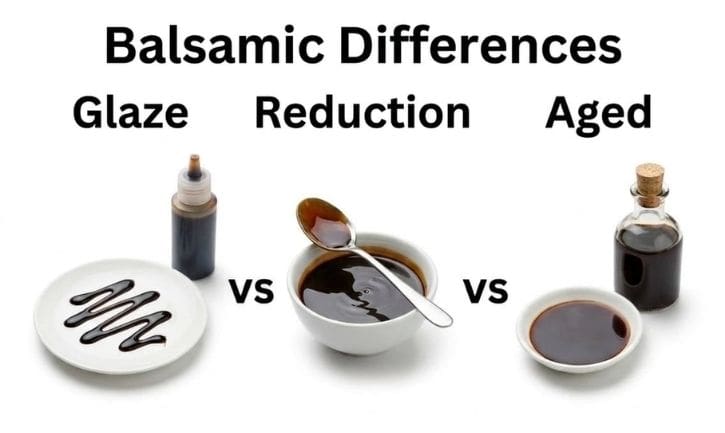
But what’s the real difference between balsamic glaze, balsamic reduction, and aged balsamic?
Are they interchangeable, or does each one have its own job?
I’m breaking it all down so you know exactly which bottle to grab (or which pan to pull out) next time you cook.
A Quick Overview
Before I get into the details, here’s your short version:
- Aged balsamic is the original product, made from cooked grape must and aged in wooden barrels. It ranges from pourable to naturally thick, depending on its age.
- Balsamic reduction is regular balsamic that you simmer at home until it thickens and concentrates.
- Balsamic glaze is a ready-made, store-bought sauce, usually thickened and sweetened, made for drizzling.
All three share the same sweet-tart DNA, but you’ll find they differ in ingredients, texture, flavor, and price.
What Is Aged Balsamic?
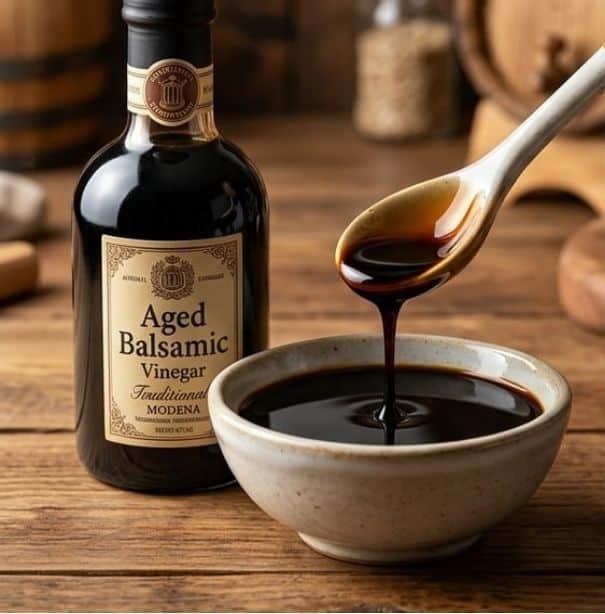
Aged balsamic is where it all starts.
It comes from Modena and the surrounding area in northern Italy, and it’s made from grape must, the freshly pressed juice of grapes with their skins and seeds, which is cooked down and then aged in wooden barrels.
There are two main categories you’ll spot on labels.
Traditional Balsamic (DOP)
“Aceto Balsamico Tradizionale di Modena DOP” is the most prestigious type.
It’s made only from cooked grape must and aged for at least 12 years in a series of barrels made from different woods.
The result is naturally thick, intensely sweet, and complex, with notes of dried fruit, honey, and wood.
It’s sold in small bottles and priced to match, so you’ll want to use it just a few drops at a time.
Balsamic of Modena (IGP)
“Aceto Balsamico di Modena IGP” is the type most of us, me included, keep in the pantry.
It’s made from cooked grape must blended with wine vinegar, then aged in wood for a shorter time.
Bottles labeled “aged” or “invecchiato” have spent at least three years in barrels, which gives them more body and a rounder flavor.
The quality range here is wide, so I think it pays to choose a producer with real history.
A good example is the balsamic vinegar of Modena by Giusti, a family company that has been making balsamic in Modena for more than four centuries and offers everything from everyday bottles to long-aged ones.
What Is Balsamic Reduction?
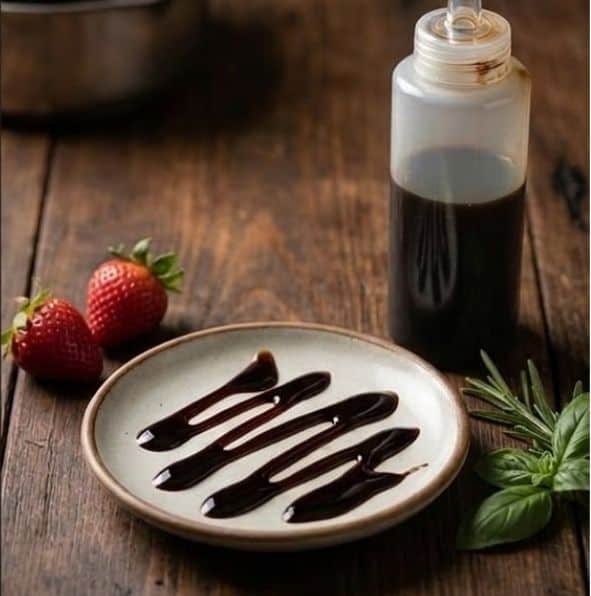
A balsamic reduction is what you get when you simmer regular balsamic until much of the water evaporates.
It’s the homemade answer to store-bought glaze, and it takes you only a few minutes.
Here’s how I make it:
- Pour 1 cup of balsamic into a small saucepan.
- Bring it to a gentle simmer over medium-low heat.
- Cook for 10 to 15 minutes, stirring now and then, until it’s reduced by about half and coats the back of a spoon.
- Let it cool. It’ll keep thickening as it sits.
Some cooks add a spoonful of honey or brown sugar for extra sweetness, but I’ve found a good balsamic usually doesn’t need it.
Keep the heat low, because your reduction can go from glossy to burnt in less than a minute.
Store any leftovers in a jar in your fridge for up to a few weeks.
What Is Balsamic Glaze?
Balsamic glaze, sometimes sold as “balsamic cream,” is the convenient, ready-to-use version.
It’s usually made from balsamic that’s been reduced and then thickened with ingredients like starch, sugar, or concentrated grape must, so you get a consistent, syrupy texture straight from the bottle.
Glaze is easy to use and perfect for decorating plates, which is why it’s so popular in restaurants.
The downside is that some brands lean heavily on sugar and thickeners, so the flavor can be sweeter and flatter than a homemade reduction or a true aged balsamic.
I always check the ingredient list: the shorter it is, the better.
The Key Differences at a Glance
Now that you know what each one is, here’s how they compare side by side.
Ingredients
Aged balsamic contains only grape must (DOP) or grape must and wine vinegar (IGP).
A reduction is simply balsamic that’s been cooked down.
A glaze often includes added sugar and thickeners.
Texture
Traditional aged balsamic is naturally thick. A reduction becomes syrupy through cooking.
A glaze is thickened artificially, so it stays smooth and squeezable.
Flavor
Aged balsamic offers the most complex flavor, with layers of fruit, wood, and gentle acidity.
A reduction is concentrated and slightly caramelized.
To me, a glaze is usually the sweetest and most one-dimensional.
Price
Traditional DOP balsamic is the most expensive.
A homemade reduction costs only as much as the balsamic you use.
Glaze sits somewhere in the middle, depending on the brand you pick.
Which One Should You Use?
I think each option has its sweet spot:
- Aged balsamic: drizzle it raw over Parmigiano Reggiano, strawberries, vanilla ice cream, risotto, or a finished steak.
- Balsamic reduction: use it on roasted vegetables, grilled chicken, pork chops, salmon, or a caprese salad when you want a fresh, homemade flavor.
- Balsamic glaze: reach for it when you need speed and a neat look, like decorating appetizers, flatbreads, or bruschetta for a party.
Can You Substitute One for Another?
Yes, with a few adjustments.
A homemade reduction is the closest substitute for glaze, and I think it usually tastes better.
A good aged IGP balsamic can stand in for traditional DOP in most recipes, though it’ll be slightly thinner and less intense.
Going the other way, glaze isn’t a great replacement for regular balsamic in dressings or marinades, because its sweetness and thickness can throw off the balance of your recipe.
Keeping the Right Balsamic in Your Kitchen
Once you understand the difference between these three, picking the right one becomes second nature.
I’d keep a solid everyday balsamic in your pantry, make a quick reduction when a recipe needs extra body, and save the really aged stuff for those moments when just a few drops can make the whole dish.

- Soft Serve vs Frozen Yogurt vs Sorbet: What Is Actually in Your Cup? - October 23, 2026
- Balsamic Glaze vs. Balsamic Reduction vs. Aged Balsamic: Why Each One Matters in Your Kitchen - October 21, 2026
- Bojangles Coleslaw Recipe - April 19, 2026
