
You order a ribeye at a restaurant.
It lands with a crust so dark it’s nearly black at the edges, and the inside runs the same rosy pink from one side clear to the other.
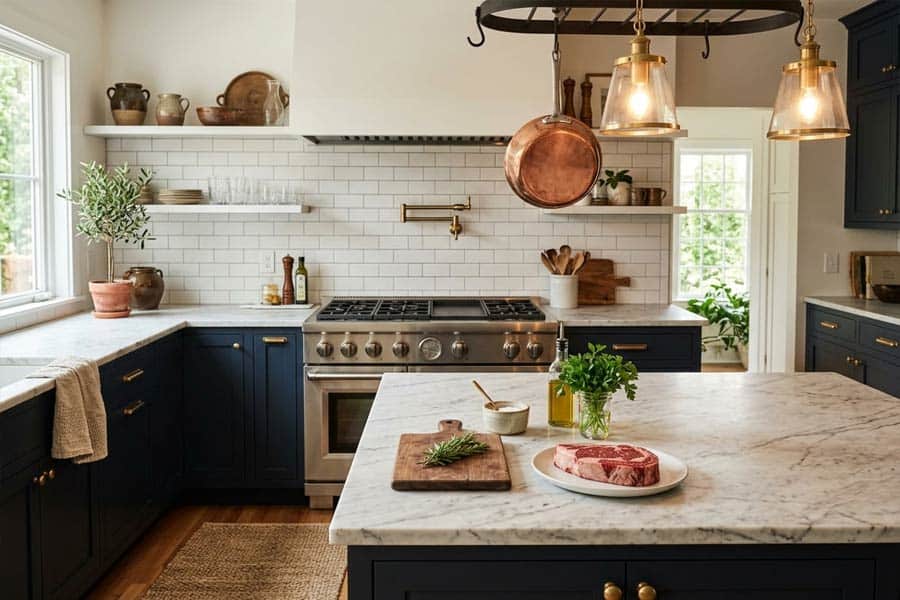
You cook the same ribeye at home, from the same butcher even, and you get a gray band around a sliver of pink hiding in the middle.
So you figure the chef has some gift you were born without. They mostly don’t. Sorry.
What they have is a kitchen engineered to make good cooking happen the same way every service: fresher ingredients, colder storage, far more heat than your range can make, purpose-built commercial kitchen equipment, and a short list of habits that owe nothing to talent.
Most of that you can steal.
One piece of it you flat-out can’t, and knowing which is which saves you from blowing a Saturday chasing a result the physics of your stove was never going to allow.
It Starts Before Anything Hits the Pan
Ask a chef why their food tastes better and plenty of them point at the walk-in fridge before the stove.
Freshness is the cheat code nobody brags about.
A busy kitchen can tear through a whole case of herbs across a Friday and Saturday.
So the parsley on your plate was cut from a living plant maybe two days ago.
The bunch in your crisper? It’s been folding in on itself since last weekend, gone slimy at the stems.
Same story with fish, with salad greens, with berries, with anything that bruises if you look at it wrong.
By the time most of us get around to cooking the thing we bought, its best day has already come and gone.
You don’t need a supplier account to fix this. Buy less, buy more often.
Shop for the three days you’ll actually cook, not the fantasy fortnight where you meal-prep every single night.
Trim your herb stems and stand them in a glass of water in the fridge, loosely covered, like a bunch of flowers.
Sounds fussy. It’s the highest-return move on this entire page, and it costs you nothing.
Temperature Control Is the Quiet Hero
This is the bit home cooks wave off, and I get it because it doesn’t sound exciting.
Pro kitchens are borderline paranoid about cold.
Product comes off the truck and goes straight into storage before it can warm up, and nothing sits out “just for a sec.”
Dairy gets one temperature, fish gets colder and usually rides on ice, not just near it.
The whole point is to hand the cook an ingredient as fresh as the morning it arrived.
Your fridge at home is quietly losing that same fight all day.
Open the door for the milk and a wave of warm room air rolls in.
Cram the shelves and the cold can’t move, so the chicken wedged behind last night’s leftovers is running a few degrees warmer than the display swears it is.
Fix it like this: keep it under 40°F, quit playing refrigerator Tetris, and stash whatever spoils fastest down low at the back, which is the coldest spot.
Raw meat, fish, and dairy all belong there.
Unglamorous. Also the whole reason a good restaurant’s tomatoes taste like tomatoes and yours taste like the fridge.
The One Gap You Can’t Fully Close: Heat
Ever wonder why the fried rice from your local spot has that smoky, faintly charred thing and yours comes out soft and pale?
It isn’t the recipe. It’s the fire.
A home burner tops out around 7,000 to 12,000 BTU.
A commercial wok burner can roar past 100,000.
You don’t close that gap with better wrist action.
It’s a different species of heat, and it’s the one thing on this list you genuinely can’t recreate at home.
So stop fighting your stove and work with what it gives you.
Get the pan hotter than feels sane, right up to the first wisp of smoke.
Cook in batches, because dumping a full pound of beef in at once tanks the temperature and now you’re boiling, not searing.
Give the food room to breathe.
Cook on cast iron or carbon steel because they drink up heat and hold it, which buys back a little of the punch a restaurant range throws around for free.
What Commercial Kitchen Equipment Gets Right and Where It Comes From
Step into the back of a restaurant you love and the surprise isn’t some gleaming gadget.
It’s that every last thing has a spot, a job, and a temperature.
A reach-in fridge an arm’s length from the line.
A blast chiller that drags a tray of hot stock through the danger zone in minutes, not the hours your home fridge would need.
Prep tables, labeled tubs, counters set at the exact height for whoever’s working them. It’s a system, not a wish list from a catalog.
That’s the part worth copying, and I’d argue it’s also free: give your own tools and ingredients a logical home so cooking becomes a sequence instead of a frantic hunt for the colander.
The equipment itself gets chosen for how long it lasts and how consistently it runs, never for how it photographs.
It’s the sort of hard-working commercial kitchen equipment that specialist suppliers like Artisan food equipment stock for kitchens grinding through fourteen-hour days.
No, you’re not fitting a blast chiller in your apartment.
But the logic behind how that space is laid out travels home just fine.
Chef Habits Worth Stealing Tonight
None of these cost a cent, and none of them need gear. They’re just what pros do on autopilot.
Prep first, cook second.
The French call it mise en place, which is a tidy way of saying get everything chopped, measured, and lined up before a single burner clicks on.
The wheels come off when you’re still mincing garlic while the onions scorch behind you.
Do the dull prep up front and the cooking part turns oddly calm.
Salt sooner than you think you should.
Salt on a steak an hour ahead, or in the pasta water before it even boils, actually works its way into the food.
A pinch flung on at the end just sits there on the surface, doing nothing.
Rest the meat.
Pull your chicken or steak off the heat, walk away for five minutes, and let the juices settle back in.
Carve it the second it leaves the pan and you get to watch all that flavor run out onto the board. Painful.
Taste as you go, constantly.
A line cook tastes a sauce four or five times and nudges it every pass.
Most home cooks season once at the start and cross their fingers.
Keep a spoon within reach and keep adjusting until it’s right.
I’ve made every one of these mistakes myself, and fixing them one at a time made a bigger difference than any new pan or gadget ever did.
Bringing the Restaurant Home
You can’t buy restaurant food, and you’re not out-cooking a burner five times stronger than yours.
Here’s the good news: that was never really the gap.
So pick two of these and try them this week.
Shop closer to when you’ll actually cook, so freshness is on your side instead of working against you.
Get the pan properly screaming before anything touches it.
Set your prep out before you start, not while you’re mid-panic.
Do those and you’ve quietly picked up most of what separates your kitchen from a professional one.
Not the machines. The conditions.
And conditions, unlike some talent you were told you don’t have, are just a decision you get to make.

- Bojangles Coleslaw Recipe - April 19, 2026
- The 12 Best Kombu Substitutes for Your Favorite Recipes - December 8, 2025
- Ruth’s Chris Creamed Corn Recipe - March 8, 2025
