
Powders have moved from the gym bag into the kitchen.
I’ve seen a scoop of whey go into pancake batter, collagen into soup, and a greens blend into a morning smoothie.
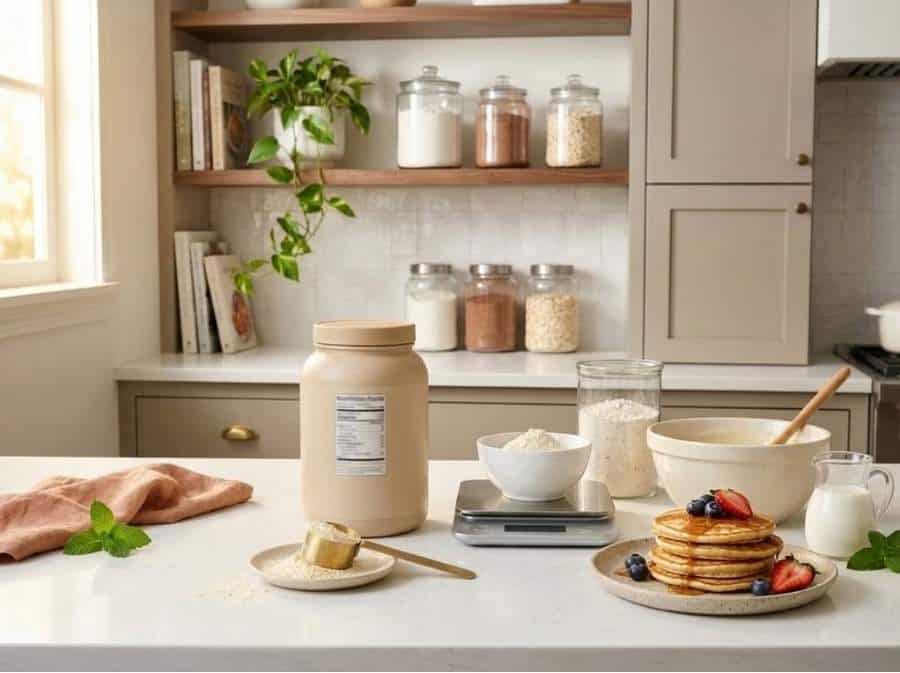
The tub sits on your pantry shelf right next to flour and cocoa.
Alt text: a scoop of powder sitting on top of a table
Turn two of those tubs around, though, and you may notice the labels don’t match.
One shows a familiar food panel.
The other shows a different box, backed by a round of supplement testing done under rules written for supplements rather than groceries.
Why Do Two Tubs of Protein Powder Carry Different Labels?
It comes down to how the seller classifies the product.
The same kind of powder can be sold as a food or as a dietary supplement.
When it’s sold as a food, it carries a Nutrition Facts panel, like your box of oats.
When it’s sold as a supplement, it carries a Supplement Facts panel instead.
The scoop in your hand may look identical either way.
A Supplement Facts panel is the label box used for dietary supplements.
For a home cook like you, I’ve found the difference shows up in three places:
- How you read the serving numbers.
- Which ingredients get listed with amounts.
- Which manufacturing rules apply behind the scenes.
How Do the Two Panels Compare?
Both panels start from a serving size, and both list what’s inside.
After that, they part ways.
| Feature | Nutrition Facts | Supplement Facts |
| Typical products | Oats, cocoa, food-style powders | Capsules, gummies, supplement powders |
| Ingredient amounts | Calories and set nutrients | Each listed ingredient per serving |
| Botanicals and blends | Rarely shown | Can appear, sometimes as a blend total |
| Ingredient list order | By weight, most to least | Often by weight, sometimes inside the panel |
Ohio State University Extension’s Nutrition Facts guide makes one point that helps with both panels.
Every amount on the label depends on the serving size.
Use half a scoop and you get half of everything listed.
I always give blends a second look.
A supplement panel may group several ingredients under one blend name and give only the combined weight.
That tells you the total, but not how much of each part went in.
What Does Supplement Testing Actually Check?
It checks that the tub holds what the label claims, and nothing it shouldn’t.
Federal rules in 21 CFR Part 111 set the baseline for supplement makers.
Alt text: a row of jars filled with different types of food
Superior Supplement Manufacturing’s testing page breaks that baseline into a few core checks I’ll walk you through:
- Identity. Each dietary ingredient is confirmed as the real thing before use.
- Potency. The finished product must contain the amounts the label lists.
- Heavy metals. Mineral ingredients are screened against set limits.
- Microbes. Herbs and finished products are checked for harmful bacteria, yeast and mold.
- Pesticides. Botanical ingredients are screened for residues.
The same page explains that finished batches must meet standards for identity, purity, strength and composition.
For you as a cook, that’s the quality step you can’t see in the tub.
Powders sold as foods follow food safety rules instead, which carry their own controls.
Neither panel shows how a particular batch was checked.
That gap is exactly where I think an outside seal earns its place.
Which Seals on a Tub Mean Someone Else Checked It?
A seal means an outside organization tested the product, not just the maker.
Not every seal carries the same weight.
A supplement buying guide from North Dakota State University Extension suggests looking for USP, NF or CL on the label.
Those letters show the maker chose an outside quality review.
The testing page adds detail on the two best-known programs.
NSF certifies supplements to NSF/ANSI 173, which it describes as the only American National Standard for testing supplements.
USP’s program checks that products fall within 90% to 110% of the label claim.
A seal tells you about contents, not flavor or how a powder bakes.
I still find it a handy tiebreaker between two similar tubs.
What Should You Watch When Cooking with Powders?
I’ve picked up a few habits that make powders easier to use well in your recipes.
- Read the scoop size. A scoop isn’t a standard cup measure, so check the grams printed on the label before you add it to your batter.
- Weigh for baking. Powders pack differently, and I rely on a kitchen scale to keep batches consistent.
- Check for fillers. NDSU Extension suggests checking added fillers, especially if anyone at your table has allergies.
- Watch the date. The guide also flags expiration dates, since some contents fade over time.
- Close the lid fast. Steam from a hot stove can clump any powder you leave open.
If you are building a breakfast around it, these IHOP-style protein pancakes show how whey can sit next to oat flour in a batter.
Labels deserve the same attention you give a drink comparison like Vitamin Water vs Gatorade.
Powder Label FAQ
Is Protein Powder a Food or a Supplement?
It can be either one.
The seller decides how to classify it, and the label panel follows that choice.
I’d look for the words Nutrition Facts or Supplement Facts.
Does a Seal Mean a Powder Tastes Better?
No. A seal from USP or NSF relates to contents and contaminants.
Taste, texture and how a powder behaves in your batter are still up to you.
In my experience, a few spoonfuls in a test pancake will tell you more than the tub ever can.
Why Does My Tub Look Half Empty When I Open It?
Fine powders settle during shipping, so a full tub at the factory can look half empty in your kitchen.
The weight on the label is what you paid for, so compare grams rather than tub size.
Can I Swap One Powder for Another in a Recipe?
Often, yes, if you match the weight.
Different powders absorb liquid differently, so add milk or water a little at a time.
I’d try a small test batch before you scale up a family recipe.
Before the Next Batch of Pancakes
Flip the tub before you scoop.
Check which panel it carries, how big a serving really is, and whether an outside seal backs the label.
I’ve found that small habit makes powders as easy to cook with as flour.
It also means your next copycat recipe starts with an ingredient you actually understand.

- Soft Serve vs Frozen Yogurt vs Sorbet: What Is Actually in Your Cup? - October 23, 2026
- Balsamic Glaze vs. Balsamic Reduction vs. Aged Balsamic: Why Each One Matters in Your Kitchen - October 21, 2026
- Bojangles Coleslaw Recipe - April 19, 2026
