
Butterfly pea flower is one of the most visually distinctive ingredients you can keep in your pantry.
Steep the dried blue blossoms in hot water and they release a naturally vivid blue infusion that can move easily from drinks to rice, desserts, and baked goods.
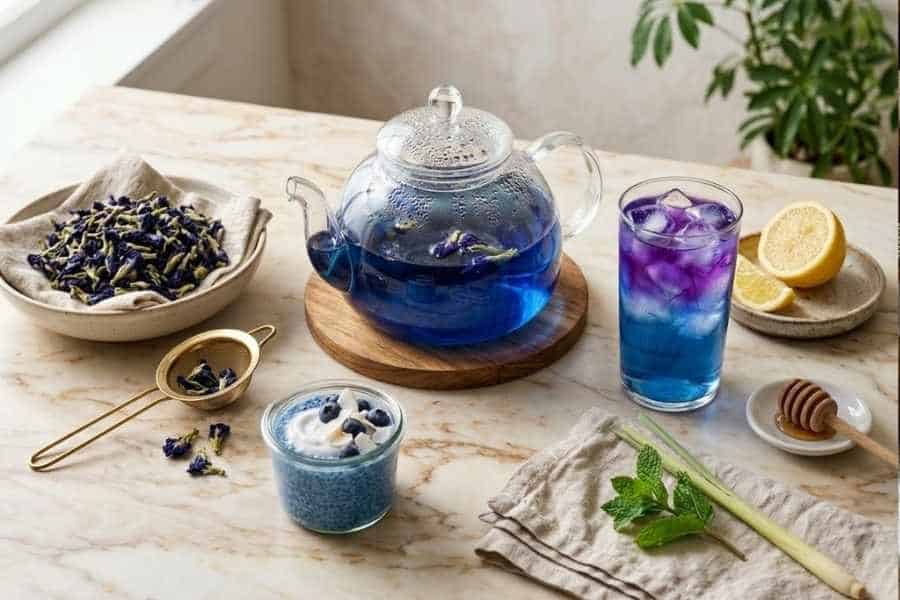
Its flavor is mild enough to work with citrus, coconut, fruit, herbs, and spices, while its color gives even simple recipes an unusual visual character.
Here are seven practical ways I’d suggest you use whole dried butterfly pea flowers, starting with a basic cup of tea and moving into lemonade, mocktails, blue rice, milk drinks, puddings, and baking.
What Is Butterfly Pea Flower? A Quick Intro for Cooks
Butterfly pea flower comes from Clitoria ternatea, a tropical plant with a long culinary history in Thailand, Malaysia, and other parts of Southeast Asia.
When you steep the dried flowers in hot water, they produce butterfly pea flower tea: a blue infusion with a mild, earthy flavor that stays relatively neutral alongside stronger ingredients.
The flower is especially well known for its response to acidity.
Lemon or lime juice changes the pH of your drink, shifting the blue toward violet or purple.
The blue color generally stays more stable under neutral conditions, while increasing acidity shifts the infusion toward violet or purple.
That makes butterfly pea useful not only as an edible flower and natural food coloring, but also as an ingredient whose appearance can change during serving.
Whole dried flowers work well when you want to steep and strain the botanical material.
Butterfly pea flower powder is more useful in some batters, frostings, and other preparations where a concentrated color needs to be mixed directly into the food.
1. Brew Butterfly Pea Flower Tea, Hot or Iced
A simple tea infusion is the starting point for many butterfly pea flower recipes.
Hot Butterfly Pea Tea
For one cup, use:
- About 1 g, or roughly 2–3 whole dried butterfly pea flowers
- 240 mL / 8 fl oz water
- Water temperature: 90–95°C / 194–203°F
- Steep time: 3–5 minutes
Place the flowers in a mug or teapot and pour the hot water over them.
Steep until the color and flavor reach the strength you prefer, then strain.
Your finished tea should be blue with a mild, gently earthy character.
Iced Butterfly Pea Tea
For iced tea, I’d make the infusion slightly stronger before chilling so melting ice doesn’t leave your drink tasting thin.
Once the brewed tea has cooled, pour it over ice cubes in a clear glass.
Simple syrup, honey, maple syrup, mint, sparkling water, lemon, or lime can all be added according to taste.
If citrus goes in, the color will naturally move away from blue and toward purple.
2. Make Color-Changing Lemon and Lime Drinks
Citrus is one of the easiest ways to turn butterfly pea tea into something more dramatic.
Butterfly Pea Lemonade
Start with a chilled batch of butterfly pea tea.
For a simple lemon syrup:
- Combine equal parts sugar and fresh lemon juice.
- Warm gently while stirring until the sugar dissolves.
- Let the syrup cool.
Pour the chilled tea into a glass, then add the lemon mixture gradually until the sweetness and tartness suit you.
As the lemon blends into the tea, your drink changes from blue toward violet or purple.
Adding the syrup slowly makes the transition easier to see.
Sparkling Butterfly Pea Spritzer
Fill a glass with ice and chilled butterfly pea tea.
Add a small amount of simple syrup and top with sparkling water.
Finish with fresh lemon or lime juice.
For a playful serving idea, place a citrus wedge alongside the glass and let your guests squeeze it into the drink at the table.
The color transformation happens as the citrus disperses through the tea.
Mint, a lemon wheel, or a thin lime slice makes a simple garnish.
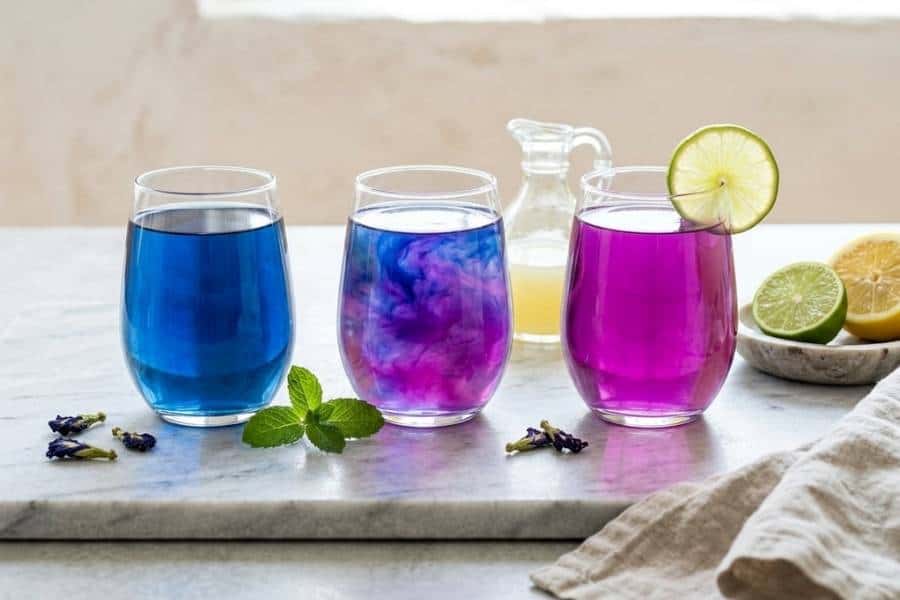
Butterfly pea tea changes from blue toward violet or purple as citrus increases acidity.
3. Build Layered Butterfly Pea Mocktails
Butterfly pea is especially effective in clear glasses where different layers and colors stay visible.
Galaxy Lemonade Mocktail
Freeze butterfly pea tea in an ice-cube tray.
Add the blue cubes to a clear glass and pour lemonade or sparkling citrus water over them.
As the cubes melt, streaks of blue and purple move through the drink, creating the galaxy-style effect without any artificial coloring.
Sparkling Butterfly Pea Mocktail
Combine chilled butterfly pea tea with sparkling water and a little simple syrup.
Add fresh lime juice slowly rather than all at once if you want a visible gradient through the glass.
You can also add:
- Mint
- Ginger
- Lemongrass
- Fresh berries
- Pineapple
- Mango
Layered Butterfly Pea Drink
For a simple two-tone presentation, pour a citrus or sparkling base into your glass first.
Slowly add concentrated butterfly pea tea over the back of a spoon.
The difference in density can help the layers stay visible briefly before they begin to mix.
I’ve kept these recipes non-alcoholic, but the same visual layering principle can be used for other adult beverage presentations.
Butterfly pea syrup is another useful option.
Brew a concentrated infusion, strain out the flowers, then dissolve sugar into the liquid while it’s still warm.
Once cooled, you can add the syrup to lemonades, sodas, and mocktails.
4. Cook Butterfly Pea Rice and Savory Dishes
Butterfly pea flower has a long association with colored rice dishes in Southeast Asia.
One familiar example is Malaysian nasi kerabu, known for its blue rice served with herbs, vegetables, and other accompaniments.
Basic Butterfly Pea Rice
Rinse your rice as usual.
Heat the amount of water you need for cooking until it’s close to a boil, then remove it from the heat.
Steep a handful of butterfly pea flowers in the hot or boiling water until the liquid develops a strong blue color.
Strain out the flowers and use the colored water in place of plain cooking water.
Because butterfly pea has a restrained flavor, your finished rice still works comfortably with savory ingredients.
For extra aroma, try adding:
- Lemongrass
- Pandan
- Coconut milk
- A small amount of salt
If you want your rice to stay blue, avoid adding lemon or lime juice to the cooking liquid.
What to Serve with Blue Rice
Butterfly pea rice can pair with grilled fish, coconut curry, satay, fresh herbs, vegetables, mango, or coconut-based sauces.
For contrast, serve the blue rice alongside plain white rice on the same plate or in the same bowl.
You can also experiment with butterfly pea infusion as the cooking liquid for quinoa or mild coconut-based grain dishes.
5. Make Butterfly Pea Milk Tea, Boba and Creamy Drinks
The flower’s mild flavor works especially well with coconut milk, dairy milk, and oat milk.
Butterfly Pea Boba Milk Tea
Cook tapioca pearls according to their package directions.
If you like a sweeter boba drink, coat the cooked pearls with brown sugar syrup.
In a clear glass, add:
- Tapioca pearls
- Ice
- Chilled butterfly pea tea
- Cold milk
The layers create a blue-and-white appearance before stirring.
Coconut Butterfly Pea Cooler
Combine chilled butterfly pea tea with coconut milk, a little sweetener, and ice.
Mango or pineapple can add a tropical fruit note without overwhelming the flower’s mild flavor.
Warm Butterfly Pea Latte
Brew a stronger butterfly pea infusion and pour it into a mug.
Add steamed milk, then sweeten with honey or vanilla if you like.
Pouring the milk slowly can preserve some contrast between the blue tea and the pale milk before you stir the drink.
Butterfly pea flower powder creates a more opaque color, while a whole-flower infusion tends to produce a clearer liquid that works especially well for layered drinks.
6. Use Butterfly Pea in Desserts and Puddings
Butterfly pea can bring soft blue and blue-purple tones to creamy desserts without synthetic food coloring.
Coconut Chia Pudding
Brew a concentrated butterfly pea infusion and let it cool.
Whisk it with coconut milk, vanilla, and your preferred sweetener.
Add chia seeds and refrigerate until the mixture thickens.
Serve in a clear glass or jar with coconut cream on top for contrast.
Jasmine Butterfly Pea Pudding
Butterfly pea and jasmine work well together both visually and aromatically.
Combine butterfly pea infusion with a small amount of brewed jasmine tea, coconut milk, sugar, and the setting ingredient your recipe calls for, such as agar or gelatin.
Pour into serving glasses and chill in the fridge until set.
Blue Rice Pudding
Cook rice with butterfly pea tea replacing some or all of the usual cooking liquid.
Finish with coconut milk, sugar, and a small pinch of salt.
Serve the pudding warm or chilled with mango, berries, or toasted coconut.
A layer of white coconut cream over the blue pudding creates an easy presentation for desserts you’ve prepared ahead of time.
7. Bake with Butterfly Pea Flower
Butterfly pea infusion can replace part or all of the water in certain doughs and batters, adding blue or blue-purple color with very little change to the underlying flavor.
Bread
Use cooled butterfly pea tea in place of plain water in a simple bread dough.
Depending on the concentration and your other ingredients, the crumb may bake to a pastel blue or blue-violet shade.
You can also divide the dough and use butterfly pea in only one portion to create a marbled effect.
Cakes and Cupcakes
Concentrated butterfly pea tea can be mixed into pale cake or cupcake batter.
Acidic ingredients in your recipe may push the final shade toward purple, so I’d run a small test batch when the exact color matters.
Blue or violet cake layers also contrast nicely with white frosting.
Frosting and Whipped Cream
Add cooled butterfly pea infusion a little at a time until you reach the shade you want.
For stronger color without adding as much liquid, mix butterfly pea flower powder with a small amount of warm water before you work it into your frosting.
Cookies
Pale cookie doughs such as sugar cookies or shortbread can also take on butterfly pea color.
Because the flavor of the flower is subtle, it usually stays secondary to vanilla, butter, coconut, citrus, or other dominant ingredients.
Savory Doughs
Butterfly pea infusion can replace part of the water in:
- Dumpling wrappers
- Bao dough
- Savory crepes
- Flatbreads
Heat can soften or alter botanical colors during cooking, so test a small portion before you commit an entire batch when appearance is important.
Buying, Storing and Working with Butterfly Pea Flowers
For cooking, look for butterfly pea flowers that stay deep blue or indigo and are mostly whole rather than heavily crushed.
A single-ingredient product gives you more control over your finished recipe because there are no added sweeteners, flavors, or artificial colors to account for.
PUREXA provides whole dried Clitoria ternatea flowers that you can steep for tea or use in colorful culinary preparations.
Store dried flowers in a sealed container away from excessive heat, moisture, and direct light.
Refrigerate finished drinks and desserts according to the storage requirements of the complete recipe.
Butterfly pea flower powder is more concentrated than a whole-flower infusion and can clump when you add it directly to a mixture.
Dispersing it first in a small amount of warm water makes it easier to work into frosting, batter, or dough.
In the United States, butterfly pea flower extract is listed in FDA regulations as a color additive exempt from certification for specified food and beverage uses.
That provision applies to the regulated extract and its permitted uses rather than serving as a blanket statement about every butterfly pea flower product.
Start with One Blue Infusion
If butterfly pea flower is new to your kitchen, start with tea.
A basic infusion lets you see the natural blue color, taste the flower on its own, and watch what happens when you add a little citrus.
From there, the same blue base can move into lemonade, mocktails, rice, boba, coconut desserts, cakes, bread, and other recipes.
The flower’s mild flavor leaves plenty of room for your other ingredients, while its color makes even simple preparations visually distinctive.

- Bojangles Coleslaw Recipe - April 19, 2026
- The 12 Best Kombu Substitutes for Your Favorite Recipes - December 8, 2025
- Ruth’s Chris Creamed Corn Recipe - March 8, 2025
