
Paper plates and takeout containers are the last thing most of us think about at the grocery store.
Compared to what you’re spending on the roast, the produce, and the good butter, that stack of foam containers barely registers.
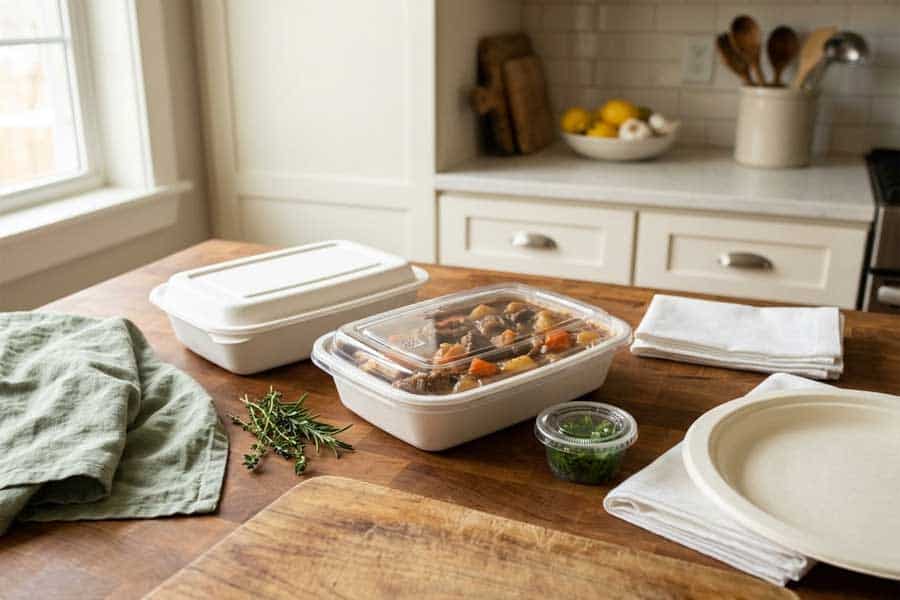
So it’s the easy place to save a few dollars!
Grab the cheapest sleeve of plates, the flimsy deli cups, the thinnest napkins on the shelf.
I did this for years, and I finally figured out what it was costing me.
It wasn’t money.
It was the pot roast that leaked all over my back seat on the way to my sister’s house.
It was the paper plate that folded in half in a guest’s hand at my own backyard party.
It was three hours of cooking that didn’t land the way it should have, because of a fifteen-cent container.
Here’s the thing I’ve come around to.
We treat this stuff as purely functional. A container holds food. A plate holds dinner. A fork works like a fork.
Almost anything clears that bar.
But whether your food actually arrives the way you cooked it, and whether people remember the meal fondly, happens entirely above that bar.
Sending Food Out the Door: When the Container Matters More than You’d Think
Think about how often your cooking leaves your house.
Leftovers going home with guests. A casserole for a neighbor who just had surgery. Cookies for the school thing. Lunch packed for someone at work.
In every one of those cases, you’re not there when the food gets eaten.
The container is doing the job you’d normally do in person.
I learned this the hard way with a chili I was pretty proud of.
I ladled it into cheap deli containers, drove twenty minutes, and arrived with chili in the bag, on the floor mat, and about half of it still in the container.
My friend was gracious about it! I was mortified.
A leaky container costs you more than the price difference, and it stacks up fast:
- the food itself, which is usually the most expensive part
- the hours you spent cooking it
- the cleanup, which in my case involved a shop vac
- the slightly deflated feeling of your good dish showing up as a mess
A container with a real snap-shut lid, vents for hot food, and walls that don’t buckle when you pick it up costs meaningfully more than the bargain version.
On a per-container basis, we’re talking pennies.
Against a pot of short ribs that took you four hours and forty dollars in ingredients, that premium is a rounding error!
I now keep two kinds on hand. Cheap ones for dry cookies and muffins, sturdy sealed ones for anything with liquid, sauce, or heat.
That one change has saved me more grief than any gadget I’ve bought.
McDonald Paper & Restaurant Supplies stocks the same packaging and disposable products that thousands of restaurants and cafes rely on, which is honestly where I’d point any home cook who’s tired of guessing in the grocery aisle.
Party Plates: What Your Guests Read in Three Seconds
Here’s something I noticed hosting my first big backyard dinner.
Your guests form an opinion about the meal before they taste a single bite of it.
It happens in the two or three seconds while they’re picking up a plate and getting in line.
A thin plastic plate that bends under a scoop of potato salad tells them one thing.
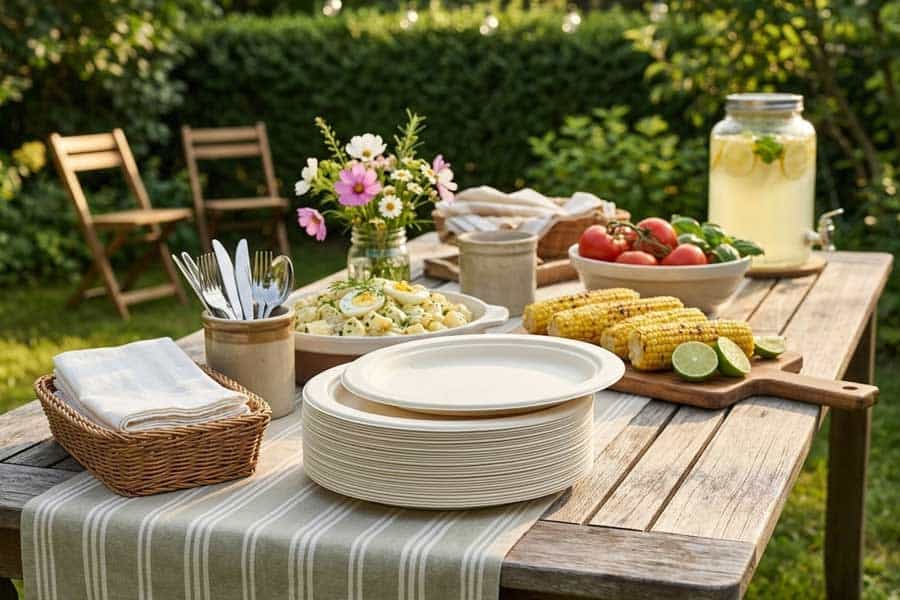
A heavy paper plate with a clean rim, or a weighty melamine one with a matte finish, tells them something completely different.
Nobody articulates this! Nobody has ever said to me, “great plate weight, Karen.”
But I can tell you that the year I switched from the flimsy plates to the sturdy ones, people held their plates differently.
They loaded them up more. They went back for seconds without doing that careful two-handed balancing act.
They relaxed.
The food was the same food. The evening felt different.
This matters most at the events people mentally compare to other events.
Graduation parties, showers, holiday buffets, anything where your guests have been to a dozen versions of the same gathering.
Cheap-looking tableware quietly lowers what people think they’re being served, even when you’ve cooked something genuinely wonderful.
I’d rather spend eight extra dollars on plates than watch a brisket I babysat all day get eaten off something that feels like a coaster.
The Small Stuff: Details Nobody Notices until Something Fails
Napkins, straws, toothpicks, little sauce cups, drink lids.
You only think about these in two moments. When you don’t have them, or when they fall apart.
A napkin that shreds the second it touches a rib.
A travel cup lid that pops off in the car.
A sauce cup that leaks ranch across the bottom of the lunch bag.
The frustration is wildly out of proportion to what these things cost, and that’s exactly the point.
The per-use cost here is almost nothing. The difference between a one-ply napkin and a decent two-ply is a fraction of a cent!
But when you get all of these small things right at once, people feel taken care of in a way they can’t quite name.
The categories where I’ve found cheaping out shows up immediately:
- Hot cup lids: a lid that doesn’t seat properly is the fastest way to ruin a car ride and a shirt
- Sauce cups: thin plastic collapses when someone squeezes it, which is maddening when you’re trying to dip a fry
- Napkins: single-ply tears the instant it meets anything oily, and guests end up grabbing four at a time anyway
Every one of these has a better version that costs under a cent more per unit.
I keep good two-ply napkins in the cabinet permanently now, and I stopped buying the cheap ones entirely.
The math was never close.
How to Figure Out What’s Actually Worth Buying
The mistake I made for years was comparing prices per package.
Fifty plates for four dollars versus fifty plates for nine dollars looks like an obvious call in the aisle.
It’s not, once you factor in what happens when they fail.
Here’s the quick gut check I run now, and it takes about ten seconds:
- What’s in this container, and what did it cost me in ingredients and time?
- Is it hot, saucy, or traveling more than five minutes?
- Has this exact situation gone wrong on me before?
- Am I handing this to someone I want to impress, or is it Tuesday leftovers?
That last question does most of the work, honestly.
Leftover rice going in the fridge overnight? The cheap container is completely fine.
A pot of soup for a friend who just lost a parent? Buy the good container. It’s a dollar.
When I started sorting my disposables this way instead of buying one grade of everything, I spent slightly more overall and had roughly zero disasters.
That trade has been worth it every single time.
Why the Cheap Container Costs You the Most
Skimping on disposables almost never saves what it looks like it saves.
It doesn’t show up as money in your pocket. It shows up as the dish that arrived wrong, the party that felt a little thrown-together, the lunch that leaked.
Once you start treating packaging, plates, and napkins as part of the meal instead of an afterthought, something shifts.
Your food shows up the way you made it. Your guests settle in. Your effort actually lands.
You spent real time on that meal! Give it something decent to travel in.
That’s the whole thing, and it’s cheaper than you’d guess.

- Bojangles Coleslaw Recipe - April 19, 2026
- The 12 Best Kombu Substitutes for Your Favorite Recipes - December 8, 2025
- Ruth’s Chris Creamed Corn Recipe - March 8, 2025
