
You can follow a recipe exactly and still leave a mess you barely notice.
While you’re cooking, your hands move from the chicken to the pepper grinder, the fridge door, a kitchen towel, or your phone.
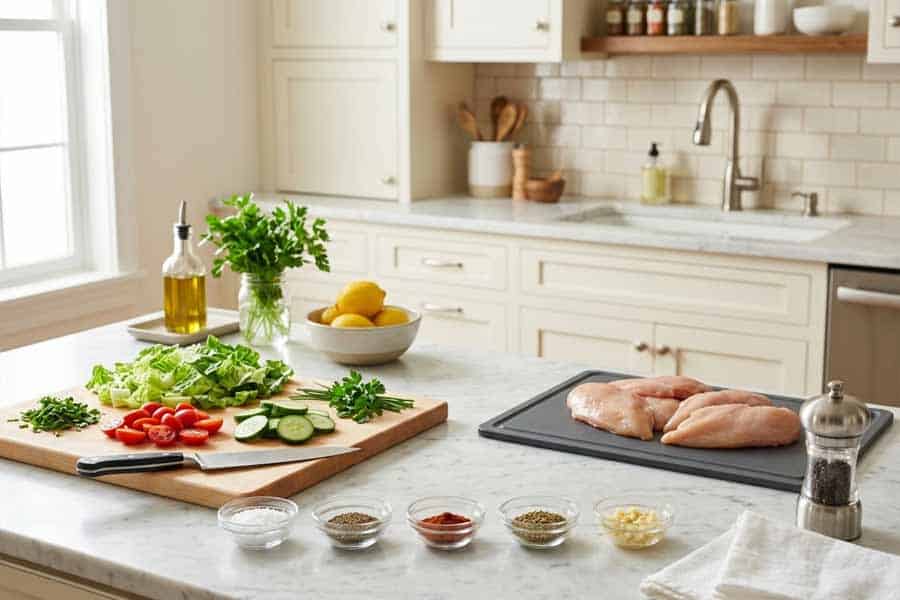
Each action seems harmless on its own, but together they can spread residue across surfaces you rarely think about.
That’s part of the problem.
Recipes are very good at telling you what happens to the food.
They rarely account for everything your hands touch along the way.
Once you start noticing those small movements, I think a cleaner and calmer way of cooking becomes surprisingly easy to build.
Recipes Track Ingredients, Not Your Hands
A recipe might tell you to dice an onion, season the chicken, and heat a skillet.
It won’t mention the cabinet handle you grabbed for paprika or the faucet you touched after handling the chicken.
Those little movements disappear into the background because they aren’t really cooking steps.
Still, they connect one part of your kitchen to another.
Cutting boards tend to get most of the attention, but your refrigerator handles, drawer pulls, seasoning containers, appliance knobs, and phone screens all become part of your prep routine.
I’ve found that thinking in terms of touchpoints makes the less obvious ones much easier to catch.
The Spice Jar Problem
Raw chicken is in the bowl.
You grab the salt, shake in some paprika, add pepper, put everything away, and carry on.
Your seasoning containers look exactly as they did five minutes ago.
That doesn’t mean your hands left them that way.
This is one of those problems that disappears with a little preparation.
Measure your seasonings or set out the containers you’ll need before handling raw ingredients.
You spend less time opening cabinets mid-recipe, and the things you use every day stay out of the raw-prep zone.
It also makes seasoning faster, which I’d say is reason enough to do it.
Your Kitchen Towel Has a Busy Job
Think about what one towel can do during dinner.
It dries your hands. Then it wipes a splash from the counter.
A few minutes later, you grab a pan handle with it.
Maybe it gets slung over your shoulder until you need it again.
That versatility is handy, but it can turn a towel into an easy transfer point.
Give your clean towels specific jobs when you can, and swap one out if it touches raw-food drips, packaging, or a surface that needs cleaning.
You don’t need a complicated towel system.
You do need to remember what your towel has already touched.
The Recipe Doesn’t Tell You When to Reset
Recipes have natural pauses even when they aren’t written down.
You finish handling raw meat. You throw away the packaging.
You crack the last egg.
You finish one stage of prep and move toward the salad, garnish, or finished plate.
Those are useful moments to wash your hands, deal with dirty utensils, and clear your work area.
The goal isn’t to scrub your kitchen every few minutes.
It’s to notice when one job has ended before you carry its mess into the next one.
I’ve found that once this becomes automatic, the reset feels like part of the recipe rather than an interruption.
When Kitchen Habits Become a System
Home cooking leaves plenty of room for improvising.
Food-service kitchens have less of it.
Several people may be preparing, storing, and serving food at once, so everyday handling habits need to be steady enough to hold up during a busy shift.
That structure becomes especially useful when your home-kitchen habits have to translate into workplace routines.
In Texas, for example, food-handler training through Rocket Cert programs covers hygienic practices, contamination prevention, and time and temperature control before those habits are put into practice during a shift.
The same mindset works at home.
Good habits are easier to keep up when they become part of your cooking routine rather than something you have to stop and remember each time.
Give Raw and Ready-to-Eat Foods Different Paths
Some ingredients get a final blast of heat. Others go straight to the plate.
Salad greens, sliced tomatoes, bread, herbs, garnishes, and finished sauces may never be cooked again, so it makes sense to keep their prep separate from raw meat, poultry, seafood, and eggs.
Keeping raw foods separate from foods that won’t be cooked before eating helps prevent germs from moving between ingredients, utensils, and plates.
Separate cutting boards are useful here, as are thoroughly washed tools and surfaces when you switch tasks.
Your prep order can make this simpler.
Chop your salad vegetables and prepare the garnish before you open the package of raw chicken, and you’ve already removed several chances for paths to cross.
A Better Workflow Starts before the First Chop
A lot of kitchen chaos comes from starting before you’re actually ready.
The pan is heating, the onions are half chopped, and suddenly you realize the garlic is still in the fridge.
Then you need a spoon. Then the seasoning. Then another bowl.
Gathering your ingredients, setting out utensils, portioning seasonings, and picking a sensible prep order cuts down on that back-and-forth.
It’s the same logic behind how restaurant kitchens organize their prep before cooking begins: give ingredients and tools a place so cooking becomes a sequence rather than a search.
You’ll probably cook faster.
More importantly, you’ll know where your hands have been.
The Mess You Don’t See Still Counts
A spotless-looking counter doesn’t tell you much about the route your hands took to get dinner on the table.
The useful shift is paying attention to the gaps between the written instructions.
Where did you reach after touching that ingredient? Did that spoon go back into the sauce?
Has your towel stayed clean?
Are you moving from raw prep to food that’s ready to serve?
You don’t need to cook like you’re working in a laboratory.
A little planning and a few well-timed resets are enough to make the whole process feel cleaner, calmer, and far less chaotic.

- Bojangles Coleslaw Recipe - April 19, 2026
- The 12 Best Kombu Substitutes for Your Favorite Recipes - December 8, 2025
- Ruth’s Chris Creamed Corn Recipe - March 8, 2025
