
Desserts with edible flowers sound fancy, but here’s the thing: they’re shockingly easy to pull off at home.
Picture this: you slide a golden loaf cake out of the oven, drizzle it with rosewater glaze, and scatter dried rose petals across the top.
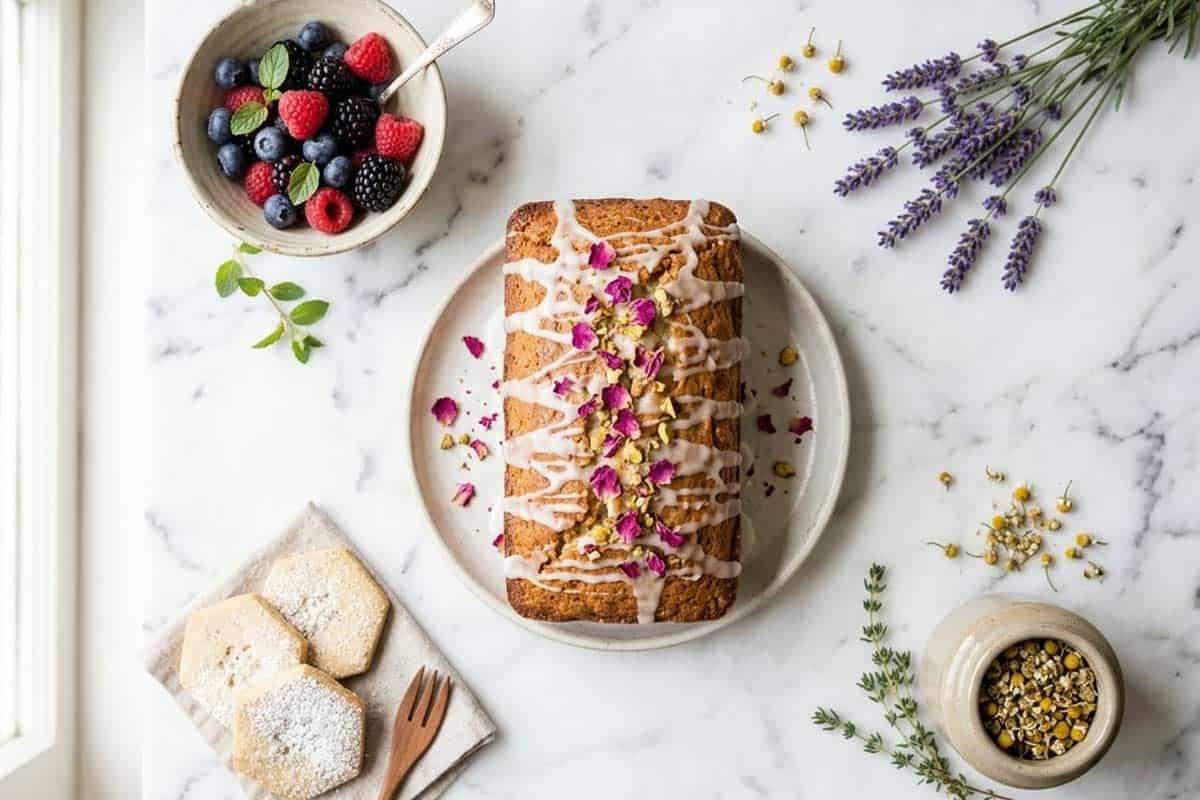
The whole kitchen smells like a garden.
Your family walks in and genuinely thinks you took a pastry class.
That’s the magic of baking with edible flowers, and it takes about ten extra minutes of effort.
And if after making such a dessert you want to surprise your loved ones with a beautiful bouquet, a reliable flower delivery Richmond VA service can bring fresh flowers right to their door.
On the MyGlobalFlowers blog, we celebrate every way flowers brighten life, including in the kitchen.
We’re a global flower delivery service that lets you order from anywhere in the US and send stunning bouquets to people you love.
But today, we’re talking about flowers you can actually eat.
In this guide, you’ll get five beginner-friendly edible flower recipes with full ingredient lists and step-by-step instructions.
You’ll also learn which flowers are safe (and which are absolutely not), where to source them in the US, how to store and prepare them, and the most common mistakes home bakers make.
Let’s get into it.
Which Flowers Are Safe to Eat? A Quick Guide for Home Bakers
Before you start making floral desserts, you need to know which blooms belong on your plate and which belong strictly in a vase.
Not every pretty petal is safe to eat, and guessing is never a good idea.
Here’s a rundown of the most popular edible varieties, along with their flavor profiles and best dessert pairings.
Lavender delivers a floral, slightly herbal flavor. It pairs beautifully with butter-based baked goods like shortbread, scones, and pound cake.
Rose petals offer a sweet, perfumed taste. They shine in glazes, frostings, and Middle Eastern-inspired desserts.
Pansies taste mildly grassy with a hint of wintergreen. They work best as a fresh visual topper on cupcakes and tarts.
Violets carry a sweet, floral flavor similar to rose but more delicate. They look stunning candied on top of sugar cookies.
Chamomile brings a gentle, apple-like sweetness. It infuses creamy desserts like panna cotta and custard exceptionally well.
Nasturtiums have a peppery kick, almost like watercress. They add a surprising contrast to sweet fruit tarts and salads.
Hibiscus tastes tart and cranberry-like. It makes incredible syrups, jams, and berry-based desserts.
Calendula offers a slightly tangy, saffron-like flavor. It works well in autumn baked goods and pumpkin desserts.
Borage tastes subtly like cucumber. It adds a refreshing twist to summer cocktails and light desserts.
Lilac provides a bright, citrusy floral note. It’s perfect for infusing sugar, cream, or simple syrups.
Flowers You Should Never Eat
This part is serious.
Some common garden and bouquet flowers are toxic, and eating them can cause anything from stomach pain to life-threatening reactions.
- Lily of the valley contains cardiac glycosides that affect heart rhythm.
- Foxglove produces digitalis compounds that are genuinely dangerous.
- Oleander is toxic in every part of the plant: leaves, stems, and flowers.
- Daffodil bulbs contain lycorine, which causes severe nausea and vomiting.
Always buy organic or food-grade flowers from trusted sources.
Never use florist-shop bouquets: those flowers are treated with pesticides and preservatives meant to extend vase life, not for human consumption.
And never pick flowers from roadsides, where car exhaust and herbicide contamination are real risks.
5 Simple Recipes for Desserts with Edible Flowers
Now for the fun part.
These five edible flower recipes range from cookies to galettes, and every single one is beginner-friendly.
You don’t need special equipment or pastry school training.
You just need a kitchen, basic pantry staples, and a handful of beautiful blooms.
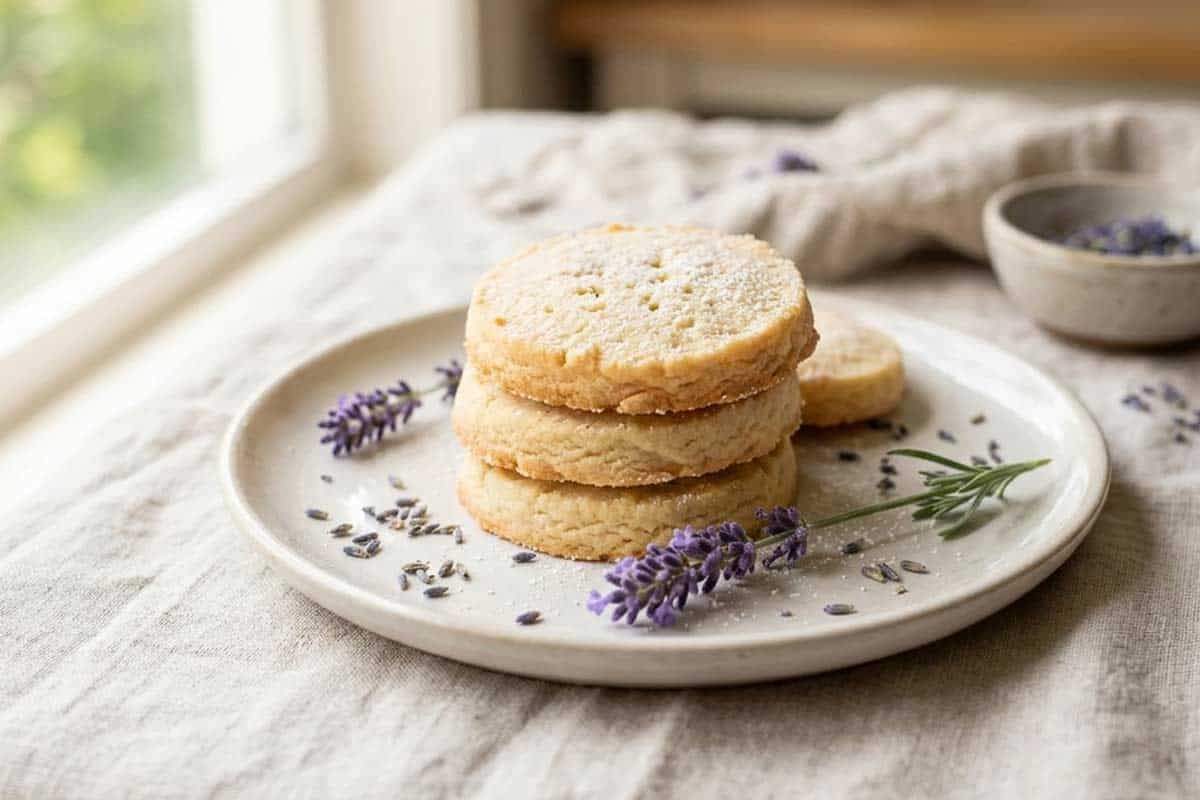
Recipe 1: Lavender Shortbread Cookies
I love this recipe because it’s almost impossible to mess up.
You mix six ingredients, shape the dough, and bake.
That’s it.
The lavender gives these buttery cookies a subtle floral elegance that feels way more sophisticated than the effort involved.
These are perfect for Mother’s Day gifting, bridal showers, or any spring gathering where you want to impress.
Prep time: 15 minutes + 30 minutes chilling | Bake time: 12–15 minutes | Yield: about 24 cookies
Ingredients:
- 1 cup (2 sticks) unsalted butter, softened
- ½ cup powdered sugar
- 2 cups all-purpose flour
- ¼ tsp salt
- 1 tbsp dried culinary lavender buds, finely chopped
- 1 tsp vanilla extract
Instructions:
- Beat the butter and powdered sugar together in a large bowl until smooth and creamy, about 2 minutes.
- Add the vanilla extract and mix until combined.
- Stir in the flour, salt, and chopped lavender buds until the dough just comes together.
- Shape the dough into a log about 2 inches in diameter, wrap it in plastic wrap, and refrigerate for 30 minutes.
- Preheat your oven to 325°F.
- Slice the log into ¼-inch rounds and place them on a parchment-lined baking sheet, spacing them about 1 inch apart.
- Bake for 12–15 minutes until the edges are barely golden (the centers will still look pale: that’s correct).
- Let the cookies cool on the pan for 5 minutes, then transfer them to a wire rack.
Flower swap: Replace lavender with dried rose petals for a softer, sweeter floral note. Use the same amount.
Recipe 2: Rose and Vanilla Loaf Cake
Honestly, this one surprised me.
I expected the rosewater to be overpowering, but the vanilla balances the rose perfectly.
The result is a moist, tender loaf cake with a glaze that tastes like something from a boutique bakery.
Bring this to Valentine’s Day dinner, an anniversary celebration, or any occasion that calls for a little romance.
Prep time: 20 minutes | Bake time: 50–55 minutes | Yield: 1 loaf (8–10 slices)
Ingredients (cake):
- 1½ cups all-purpose flour
- 1 cup granulated sugar
- ½ cup (1 stick) unsalted butter, melted
- 2 large eggs
- ½ cup whole milk
- 2 tsp vanilla extract
- 1½ tsp baking powder
- ¼ tsp salt
Ingredients (rosewater glaze):
- 1 cup powdered sugar
- 1 tbsp rosewater
- 1–2 tbsp whole milk
- Dried rose petals for topping
Instructions:
- Preheat your oven to 350°F and grease a 9 × 5-inch loaf pan.
- Whisk together the flour, baking powder, and salt in a medium bowl.
- Beat the melted butter and sugar in a large bowl until combined.
- Add the eggs one at a time, beating after each one, then stir in the vanilla and milk.
- Fold the dry ingredients into the wet ingredients until just combined: don’t overmix.
- Pour the batter into the prepared pan and bake for 50–55 minutes, until a toothpick inserted in the center comes out clean.
- Let the cake cool in the pan for 10 minutes, then turn it out onto a wire rack to cool completely.
- Whisk together the powdered sugar, rosewater, and milk to make a pourable glaze.
- Drizzle the glaze over the cooled cake and scatter dried rose petals on top.
Flower swap: Try lilac blossoms as a topper instead of rose petals. Lilac adds a bright citrusy scent that plays nicely with vanilla.
Recipe 3: Chamomile Honey Panna Cotta
I recommend this recipe for anyone who thinks floral desserts require an oven.
You don’t bake this at all: you cook it on the stovetop and let the fridge do the rest.
The chamomile infuses the cream with a gentle apple-like sweetness, and the honey adds warmth without being cloying.
Most flower-topped treats lean heavily toward cakes and cookies, so panna cotta fills a nice gap on the dessert table.
Prep time: 15 minutes + 4 hours chilling | Cook time: 10 minutes | Yield: 4 servings
Ingredients:
- 2 cups heavy cream
- ¼ cup whole milk
- 3 tbsp honey (local honey is ideal)
- 3 chamomile tea bags or 2 tbsp loose dried chamomile flowers
- 2¼ tsp unflavored gelatin powder (1 packet)
- 3 tbsp cold water
- Fresh or dried chamomile flowers for garnish
- Extra honey for drizzling
Instructions:
- Pour the cold water into a small bowl and sprinkle the gelatin over the top. Let it sit for 5 minutes to bloom.
- Combine the heavy cream, milk, and honey in a small saucepan over medium heat. Stir gently until the honey dissolves.
- Add the chamomile tea bags or loose flowers and reduce the heat to low. Let the mixture steep for 8 minutes: don’t let it boil.
- Remove the tea bags or strain out the loose flowers using a fine mesh sieve.
- Remove the pan from the heat and whisk in the bloomed gelatin until fully dissolved.
- Pour the mixture evenly into four ramekins or small glasses.
- Let the panna cotta cool to room temperature, then cover with plastic wrap and refrigerate for at least 4 hours, or overnight.
- Before serving, drizzle with a little honey and top with fresh or dried chamomile flowers.
Serving tip: To unmold, run a thin knife around the edge of each ramekin and invert onto a small plate. If you prefer a more casual presentation, serve directly in the glass.
Flower swap: Swap chamomile for dried lavender buds to steep into the cream. Start with just 1 teaspoon: lavender is potent, and a little goes a long way.
Recipe 4: Violet Sugar Cookies with Candied Flowers
These cookies are probably the most visually striking thing on this list.
Candied flowers look like they belong in a professional bakery window, but the technique is genuinely simple.
You brush each petal with egg white, dust it with superfine sugar, and let it dry.
That’s the whole process.
The sugar cookies underneath are soft and buttery, and the candied violets on top make each one look completely unique.
Prep time: 30 minutes + 2 hours drying + 1 hour chilling | Bake time: 10–12 minutes | Yield: about 20 cookies
Ingredients (candied violets: make these first):
- 20–30 fresh violet flowers, stems removed
- 1 egg white, lightly beaten
- ¼ cup superfine (caster) sugar
- A small paintbrush or pastry brush
Ingredients (sugar cookies):
- 2¼ cups all-purpose flour
- ¾ cup (1½ sticks) unsalted butter, softened
- ¾ cup granulated sugar
- 1 large egg
- 1½ tsp vanilla extract
- ½ tsp almond extract (optional but lovely)
- ½ tsp baking powder
- ¼ tsp salt
Ingredients (simple glaze):
- 1½ cups powdered sugar
- 2–3 tbsp whole milk
- A drop of purple food coloring (optional)
Instructions (candied violets):
- Line a baking sheet with parchment paper.
- Working one flower at a time, gently brush both sides of each violet with the beaten egg white using the small paintbrush.
- Hold the flower over a small bowl and sprinkle superfine sugar over it, turning it carefully to coat every surface.
- Place the sugared violet on the parchment-lined sheet.
- Repeat with all remaining flowers, then let them dry at room temperature for at least 2 hours until completely firm and crystallized.
Instructions (cookies):
- Beat the butter and sugar together until light and fluffy, about 3 minutes.
- Add the egg, vanilla, and almond extract, mixing until combined.
- Whisk together the flour, baking powder, and salt in a separate bowl, then gradually add to the butter mixture until a soft dough forms.
- Divide the dough in half, flatten into discs, wrap in plastic wrap, and refrigerate for 1 hour.
- Preheat your oven to 350°F.
- Roll the dough out on a lightly floured surface to about ¼-inch thickness and cut into your desired shapes.
- Place cookies on a parchment-lined baking sheet and bake for 10–12 minutes until the edges are just set but not browned.
- Cool completely on a wire rack before glazing.
Instructions (assembly):
- Whisk together the powdered sugar, milk, and food coloring if using, until you get a smooth, pourable glaze.
- Spoon or spread a thin layer of glaze over each cooled cookie.
- While the glaze is still wet, gently press one or two candied violets onto the surface of each cookie.
- Let the glaze set completely before serving or packaging, about 20–30 minutes.
Flower swap: Pansies work beautifully here in place of violets. They’re larger, so one pansy per cookie creates a stunning centerpiece effect.
Recipe 5: Hibiscus and Berry Galette
A galette is a rustic, free-form tart that you bake directly on a sheet pan.
There’s no pie dish, no crimping, no stress.
You fold the edges of the pastry up over the filling, and any imperfections just make it look more homemade and charming.
Hibiscus adds a gorgeous deep cranberry tartness that balances the sweetness of the berries perfectly.
This is the recipe I reach for when I want something that looks impressive but gives me very little trouble.
Prep time: 25 minutes + 1 hour chilling | Bake time: 35–40 minutes | Yield: 6–8 servings
Ingredients (pastry):
- 1¼ cups all-purpose flour
- ½ tsp salt
- 1 tbsp granulated sugar
- ½ cup (1 stick) cold unsalted butter, cut into small cubes
- 3–4 tbsp ice water
Ingredients (hibiscus berry filling):
- 2 cups mixed berries (blueberries, raspberries, and blackberries work well)
- 2 tbsp dried hibiscus flowers
- ⅓ cup granulated sugar
- 2 tbsp cornstarch
- 1 tbsp lemon juice
- ½ tsp vanilla extract
Ingredients (finishing):
- 1 egg, beaten (for egg wash)
- 1 tbsp coarse sugar for sprinkling
- Fresh hibiscus flowers or additional dried petals for garnish
Instructions (pastry):
- Combine the flour, salt, and sugar in a large bowl.
- Add the cold butter cubes and use your fingertips or a pastry cutter to work the butter into the flour until the mixture resembles coarse crumbs with some pea-sized pieces remaining.
- Add ice water one tablespoon at a time, mixing gently with a fork until the dough just holds together when pressed.
- Shape into a disc, wrap in plastic wrap, and refrigerate for 1 hour.
Instructions (filling and assembly):
- Preheat your oven to 400°F and line a large baking sheet with parchment paper.
- Finely chop the dried hibiscus flowers and combine them with the berries, sugar, cornstarch, lemon juice, and vanilla in a bowl. Toss gently to coat.
- Roll the chilled pastry out on a lightly floured surface into a rough 12-inch circle. It doesn’t need to be perfect: that’s the beauty of a galette.
- Transfer the pastry circle to the prepared baking sheet.
- Spoon the berry filling into the center of the pastry, leaving a 2-inch border all around.
- Fold the edges of the pastry up and over the outer edge of the filling, pleating as you go to create a rustic border.
- Brush the folded pastry edges with the beaten egg and sprinkle with coarse sugar.
- Bake for 35–40 minutes until the crust is deep golden and the berry filling is bubbling.
- Let the galette cool for at least 15 minutes before slicing. Scatter fresh or dried hibiscus flowers over the top just before serving.
Flower swap: Replace hibiscus with dried calendula petals for an earthier, slightly tangy flavor that pairs well with stone fruits like peaches or plums in late summer.
Where to Buy Edible Flowers in the US
This is the question I get asked most often, and the answer depends on where you live and how much planning time you have.
Here are your best options.
Specialty grocery stores like Whole Foods and Sprouts often carry small packages of fresh edible flowers in the produce section, particularly in spring and summer. Availability varies by location.
Farmers markets are an excellent source, especially from late spring through early fall. Look for vendors who grow microgreens or specialty herbs: they frequently sell edible flowers alongside their other products. You can ask directly about pesticide use, which is a big advantage.
Online retailers offer the widest selection and the most consistent availability year-round. Dried edible flowers ship well and last significantly longer than fresh ones.
Some trusted US-based online sources include:
- Marx Foods: specializes in specialty food ingredients including a wide range of dried and fresh edible flowers
- Gourmet Sweet Botanicals: offers an extensive selection of fresh edible flowers and ships nationwide
- Etsy shops: many small-batch growers sell dried culinary flowers through Etsy, often organically grown and harvested by hand
- Amazon: carries several reputable brands of dried edible flowers, including lavender, rose petals, and hibiscus
- Frontier Co-op: a well-known natural food supplier that sells culinary-grade dried flowers in bulk
Grow your own: this is the most rewarding option if you have even a small outdoor space or a sunny windowsill. Lavender, nasturtiums, pansies, and calendula are all beginner-friendly plants that thrive in containers. Growing your own gives you complete control over what goes into the soil and onto your plate.
Whatever source you choose, always look for the words “food grade,” “culinary,” or “certified organic” on the label. If a source can’t tell you how the flowers were grown and handled, find a different source.
How to Store and Prepare Edible Flowers
Even the most beautiful edible flowers will disappoint you if you handle them incorrectly.
Here’s how to get the most out of every bloom.
Storing Fresh Edible Flowers
Fresh flowers are delicate and have a short window of peak quality.
- Place fresh flowers in a single layer between slightly damp paper towels.
- Store them in an airtight container or zip-lock bag in the refrigerator.
- Use within 1–3 days for best appearance and flavor.
- Never store fresh flowers near strong-smelling foods like onions or garlic: they absorb odors easily.
- Keep them away from the coldest part of the fridge, as frost damage will wilt petals quickly.
Storing Dried Edible Flowers
Dried flowers are much more forgiving and shelf-stable.
- Store dried flowers in an airtight glass jar away from direct sunlight and heat.
- A cool, dark pantry or cabinet is ideal.
- Most dried edible flowers will retain their color, flavor, and aroma for 6–12 months when stored properly.
- Label your jars with the purchase or drying date so you always know how fresh your supply is.
Preparing Edible Flowers Before Use
A little preparation goes a long way toward making your floral desserts look and taste their best.
- Inspect each flower carefully. Check for small insects hiding inside petals: this is especially common with nasturtiums and pansies. Gently shake each bloom over a bowl of water.
- Rinse gently. Place the flowers in a bowl of cool water and swish them softly. Don’t run them under a direct stream of water, which can bruise or tear delicate petals.
- Dry thoroughly. Lay the rinsed flowers on a clean paper towel and let them air dry, or use a salad spinner on its gentlest setting. Any moisture left on the petals will cause them to wilt faster once placed on your dessert.
- Remove non-edible parts. For most flowers, the petals are the edible portion. Remove stems, sepals (the small green leaf-like parts at the base of the flower), and the white or yellow base of the petals if it tastes bitter. Rose petals, for example, have a slightly bitter heel at their base that is worth trimming.
- Use immediately after prepping whenever possible, or store prepped flowers between damp paper towels in the fridge for up to a few hours before use.
Common Mistakes Home Bakers Make with Edible Flowers
I’ve made most of these mistakes myself at some point, so consider this a shortcut to saving your desserts.
Mistake 1: Using Too Many Flowers
More is rarely better when it comes to floral flavors.
Lavender in particular can tip from elegant to soapy very quickly if you use too much.
Start with the smallest recommended amount in any recipe, taste as you go, and increase gradually.
You can always add more, but you can’t take it back once it’s baked in.
Mistake 2: Buying Flowers from a Florist for Cooking
This one is worth repeating because it’s so tempting to just grab a pretty bunch from the grocery store flower section.
Florist flowers are treated with fungicides, pesticides, and preservative chemicals that are not safe for consumption.
Always source flowers specifically labeled as food grade or culinary grade.
Mistake 3: Adding Flowers to Hot Desserts Too Early
Heat destroys the color, texture, and visual appeal of most edible flowers.
If you’re decorating a warm cake or a freshly baked tart, let the dessert cool completely before adding your floral garnishes.
The only exception is when you’re intentionally baking flowers into the batter or infusing them into a cream: in those cases, heat is part of the process.
Mistake 4: Skipping the Taste Test
Not every edible flower tastes good to every person.
Before you commit a full batch of cookies or a celebration cake to a particular flower, taste a single petal on its own.
Then taste it alongside your planned flavor combinations.
Some flowers have a bitterness, pepperiness, or intensity that works beautifully in one context and clashes badly in another.
Mistake 5: Forgetting to Account for Allergies
Edible flowers are still plants, and some guests may have sensitivities or allergies to specific varieties.
People who react to ragweed, chrysanthemums, or other plants in the Asteraceae family may also react to calendula or chamomile, which belong to the same botanical family.
If you’re serving floral desserts at a gathering, mention which flowers you’ve used so guests can make informed choices.
Mistake 6: Using Flowers That Haven’t Been Properly Identified
If you’re foraging or growing your own flowers and you’re not 100% certain of the variety, don’t use it.
Some toxic flowers look remarkably similar to edible ones.
When in doubt, leave it out: or consult a reliable field guide and cross-reference with at least two trusted sources before eating anything you’ve foraged.
Simple Ways to Use Edible Flowers Beyond These Recipes
Once you get comfortable with floral baking, you’ll start seeing opportunities everywhere.
Here are a few quick ideas to keep the inspiration going.
- Floral ice cubes: freeze individual petals or small blooms inside ice cubes for a stunning addition to summer drinks and punch bowls.
- Flower-infused simple syrup: simmer equal parts sugar and water with a handful of dried lavender, rose petals, or lilac blossoms for 10 minutes, strain, and use in cocktails, lemonade, or cake soak.
- Pressed flower cake decorations: gently press fresh edible flowers between sheets of parchment paper under a heavy book for 24–48 hours, then use them to decorate frosted cakes.
- Floral whipped cream: fold a teaspoon of rosewater or lavender syrup into freshly whipped cream for an easy, fragrant topping.
- Flower sugar: blend dried petals with granulated sugar in a food processor to create a beautifully scented baking sugar. Use it anywhere you’d use regular sugar for a subtle floral undertone.
- Hibiscus jam: add dried hibiscus flowers to any berry jam recipe for a deeper color and a bright, tart flavor that pairs beautifully with scones and pound cake.
Your First Floral Dessert Is Closer Than You Think
Baking with edible flowers doesn’t require special talent or expensive equipment.
It requires a little knowledge about which flowers are safe, a reliable source for food-grade blooms, and a willingness to experiment.
The five recipes in this guide give you a solid starting point: from the simplicity of lavender shortbread to the rustic drama of a hibiscus berry galette.
Start with whichever recipe excites you most, taste your flowers before committing them to a full batch, and don’t be afraid to try the swaps suggested at the end of each recipe.
Edible flower desserts have a way of making ordinary moments feel a little more special.
And if you want to extend that feeling beyond the kitchen, you can always pair your floral dessert with an equally beautiful floral gift.
At MyGlobalFlowers, we make it easy to send stunning bouquets anywhere in the US: whether you’re celebrating a birthday, a new home, or simply wanting to brighten someone’s day.
Explore our flower delivery Richmond VA service, or browse our full range of arrangements to find something as beautiful as the desserts you’re about to bake.

- Bojangles Coleslaw Recipe - April 19, 2026
- The 12 Best Kombu Substitutes for Your Favorite Recipes - December 8, 2025
- Ruth’s Chris Creamed Corn Recipe - March 8, 2025
