
Eating with the seasons used to be the only way anyone cooked.
Then came the global supply chain, year-round strawberries in January, and a kind of culinary amnesia about what actually grows when.
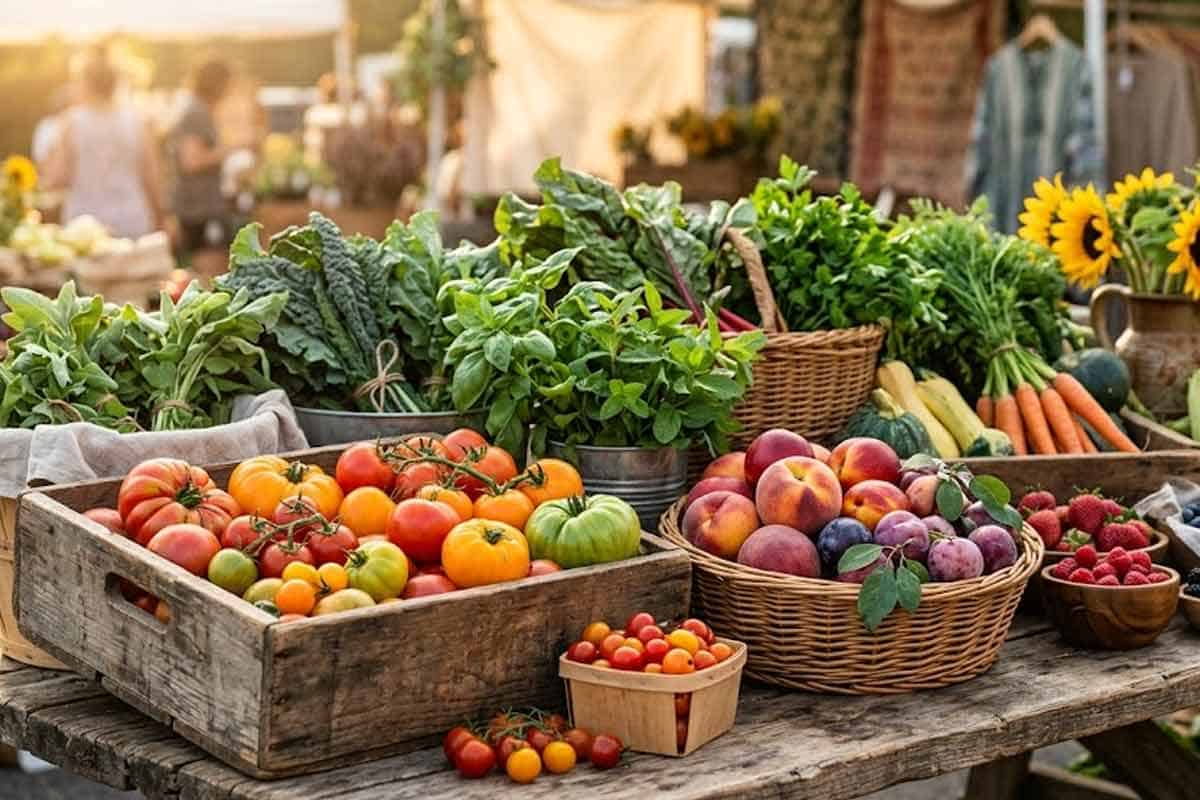
Bringing seasonality back into your kitchen is one of the simplest shifts you can make for better flavor, better nutrition, and a smaller footprint.
Here is why your menu should change every three months, and how to make it happen without overhauling your entire life.
The Case for Cooking with the Calendar
There’s a reason a tomato in August tastes like sunshine and a tomato in February tastes like wet cardboard.
Produce hits its peak when it’s grown in the right climate at the right time, then picked and eaten close to home.
The flavor difference isn’t subtle.
Anyone who has bitten into a real summer peach knows that the version flown in from the other side of the world during winter is barely the same fruit.
Nutrition follows flavor.
Fruits and vegetables eaten close to harvest hold onto more vitamins, antioxidants, and natural sugars.
The longer something sits in a truck, a warehouse, and then a grocery shelf, the more those nutrients fade.
Seasonal eating isn’t a wellness trend invented yesterday.
It’s the original way humans got nourishment, and our bodies still respond to it.
What Your Body Actually Needs Through the Year
Each season seems to deliver exactly what we crave, which is one of the quiet miracles of how this all works.
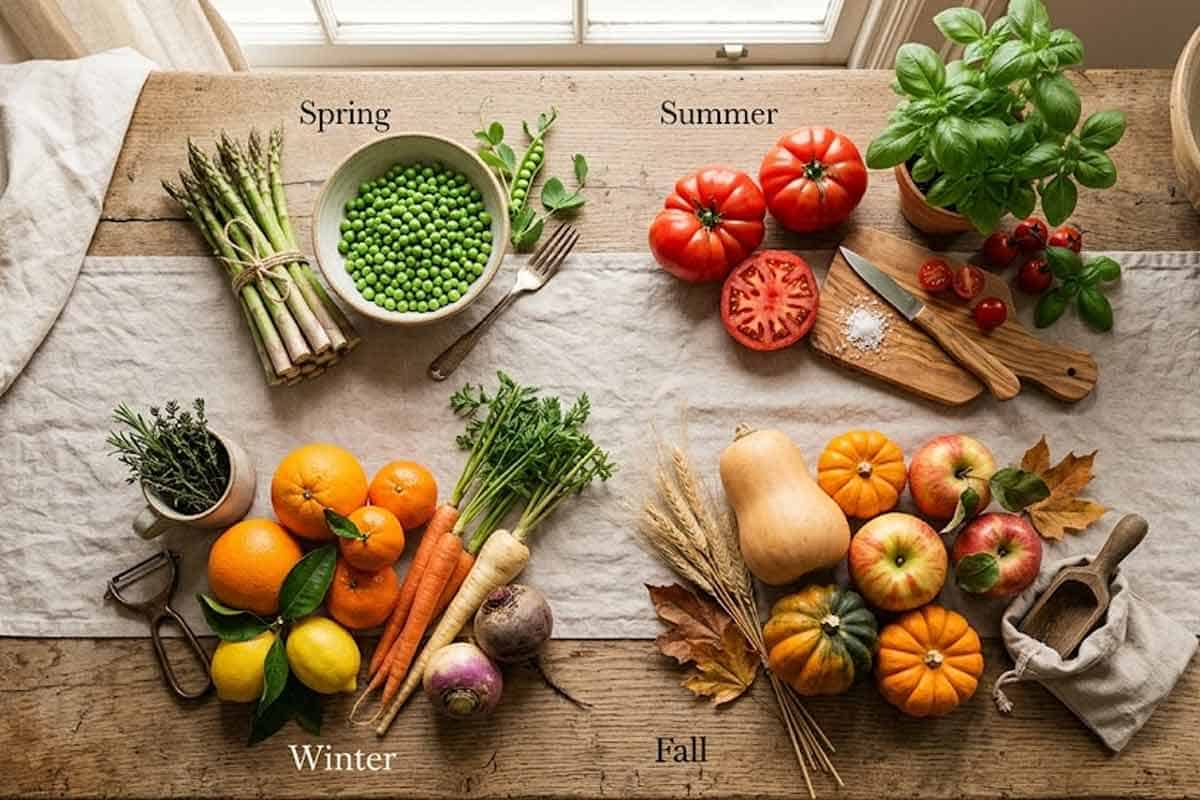
Spring brings light greens, asparagus, peas, and radishes after a long winter of heavier meals.
These foods are cleansing and a little bitter, which supports digestion as the weather warms.
Summer gives us water dense produce.
Cucumbers, tomatoes, berries, melons, stone fruits, and leafy salads keep us hydrated and cool when the temperature climbs.
Fall pulls us back toward grounding foods.
Squash, apples, pears, root vegetables, and warming spices help the body settle in as the days shorten.
Winter is for storage crops and slow cooking.
Cabbages, citrus, hardy greens, beans, and grains carry us through with steady, comforting fuel.
If you build your menu around what’s in season locally, you end up eating in a rhythm that’s naturally varied and naturally balanced.
Reworking Your Menu Every Three Months
You don’t need to reinvent your entire pantry every quarter.
A few practical moves go a long way.
Start with a list of five core recipes that lean heavily on what’s in season right now.
These become your weekly anchors.
Build new flavor pairings around them.
Pesto in spring, sliced tomato sandwiches in summer, roasted squash bowls in fall, citrus and grain salads in winter.
I’d recommend visiting a local farmers market once every two to three weeks during peak growing season.
You’ll absorb seasonality faster from a single market visit than from any list online.
Talk to the growers and ask what’s at its best that week.
Swap one shelf in your pantry per quarter.
Rotate your spices, oils, and condiments to match the season.
Smoky paprika and warm cumin in fall and winter.
Bright citrus, fresh herbs, and lighter vinegars in spring and summer.
Seasonality Beyond the Home Kitchen
What used to be a home cook habit has now become a standard in professional spaces as well.
Restaurants build menus around what local farms are harvesting that month.
Even corporate event catering has moved in this direction, with chefs designing menus around what’s actually being grown nearby rather than relying on the same year round staples.
The teams behind larger gatherings have figured out what home cooks already knew.
Food tastes better, costs less, and looks more thoughtful when it lines up with the season.
A Few Tips to Make It Stick
Keep a small seasonal cheat sheet on your fridge.
Even a hand written list of what’s in season in your region helps you shop and plan faster.
Freeze and preserve at the peak.
Tomatoes in August, berries in July, herbs at the end of summer.
A little weekend effort during peak harvest pays you back all winter.
Don’t chase perfection.
Eating seasonally even sixty percent of the time will transform your meals.
The rest of the time, do what works for your life.
Cooking with the seasons is one of those rare habits that quietly improves almost everything.
Better flavor. Better health. Less waste.
A stronger connection to where you actually live.
Three months from now your menu will look different, and that’s exactly the point.

- Bojangles Coleslaw Recipe - April 19, 2026
- The 12 Best Kombu Substitutes for Your Favorite Recipes - December 8, 2025
- Ruth’s Chris Creamed Corn Recipe - March 8, 2025
