
Baking paper is one of those kitchen essentials that tends to go unnoticed, right up until something goes wrong.
When it works the way it should, it keeps your food from sticking, handles the heat of your oven without complaint, and peels away cleanly from the bottom of your favorite baked goods.
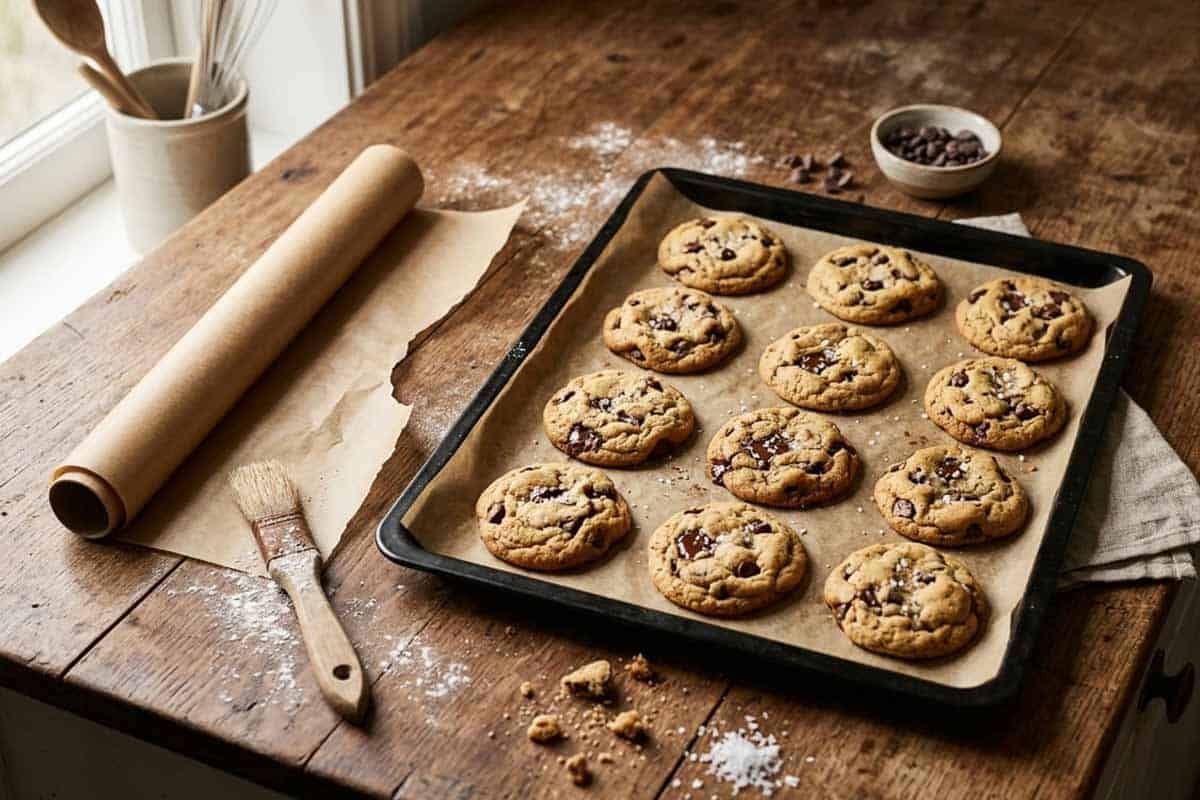
When it fails, you’re left with burnt edges, dough stuck to the pan, or a cleanup job you really didn’t need.
I think most of us have been there at least once.
The same quiet reliability is expected from other types of food paper, from greaseproof sheets used to wrap pastries to paper bags that carry fresh bread home from the bakery.
What looks like a simple sheet of paper is actually a material designed for very specific conditions.
Paper that touches your food has to handle heat, moisture, and fats without falling apart or affecting what you’re eating.
At the same time, it has to meet food safety requirements.
None of that happens by accident. It comes from carefully controlled processes involving fiber selection, surface treatment, and quality control.
Designed for Specific Tasks, Not General Use
Food paper isn’t a one-size-fits-all material, and I think that’s something worth knowing as a home cook.
Each type is made for a particular job, depending on what it needs to do.
Baking paper is built for the conditions inside your oven.
It typically needs to handle temperatures of up to around 446°F (230°C) while keeping both its strength and its non-stick surface intact.
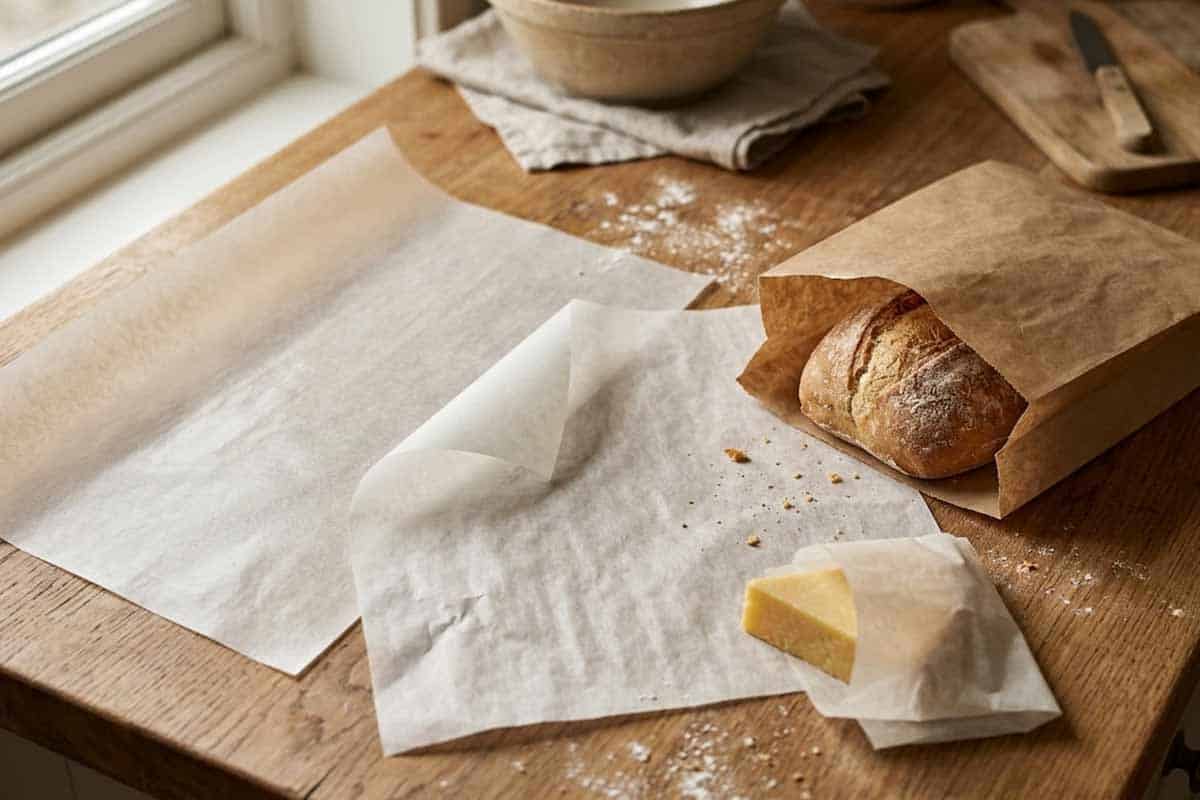
Greaseproof paper, by contrast, is made to resist fats and oils, which makes it great for wrapping pastries, sandwiches, and fried foods.
Sulfite paper is often used for lighter jobs, like wrapping dry or delicate foods where grease resistance matters less but cleanliness and presentation still do.
These functional differences come down to how cellulose fibers are processed during manufacturing.
By adjusting how fibers are refined and compressed, makers can control how tightly they bond together.
A denser structure slows the movement of liquids and fats through the paper, while a more open structure allows for breathability and flexibility.
The result is a range of materials that can look nearly identical on your kitchen counter but behave very differently once they’re in use.
Building Grease Resistance Without PFAS
One of the more meaningful developments in recent years has been the move away from per- and polyfluoroalkyl substances, or PFAS, in food paper production.
These chemicals were widely used to create effective grease-resistant barriers, but growing concerns about their persistence in the environment led manufacturers to find better alternatives.
Today, grease resistance is often built through physical methods instead.
Mechanical refining compacts fibers into a dense network that naturally slows the penetration of oils and fats.
In some cases, mineral-based barrier layers are added to boost performance without relying on fluorinated compounds.
Baking paper is a good example of how different techniques can be combined to get great results in your kitchen.
Many baking papers are coated with silicone on both sides.
Silicone comes from mineral sources like quartz and sand and creates a surface that helps keep food from sticking while also helping the paper hold up to oven heat.
Under normal home cooking conditions, some baking papers can actually be used more than once, depending on what you’ve been making.
Other grease-resistant papers rely almost entirely on fiber structure.
By compressing fibers tightly enough, manufacturers can create sheets that naturally limit grease penetration without any additional coatings.
These are often used for wrapping foods where flexibility and a little breathability matter, like cheese or freshly baked goods straight from the oven.
Printing as Part of the Material System
If you’ve ever picked up a printed bakery bag or a branded sandwich wrap, you’ve seen this side of food paper up close.
Printing is a common feature of food wrapping materials, and while it might seem like a simple finishing touch, printing on paper that touches your food requires careful choices about both technique and ink.
Several printing methods are used in production, including digital, offset, and flexographic printing.
Flexographic printing is especially common for paper packaging because it works well across different paper surfaces and delivers consistent results across a wide range of paper grades.
The inks used are typically water-based and specifically formulated for food-contact applications.
They’re designed to reduce the risk of anything transferring from the printed surface to your food.
Meeting regulatory frameworks, like the Swiss Ordinance governing materials that contact food, is an important part of making sure printed packaging is actually safe to use.
Modern production also aims to use resources efficiently.
Computer-assisted systems help keep color output consistent, and in some cases leftover ink pigments are reused elsewhere in production, like for coloring kraft paper.
Why It Matters in Your Kitchen
For most of us, the technical side of food paper stays well out of sight.
But these details directly shape how the materials you use every day actually perform.
Baking paper that releases your cookies cleanly, greaseproof paper that doesn’t soak through when you wrap a warm pastry, and paper bags that hold their shape on the way home from the bakery: all of that depends on how fibers are processed and how surfaces are treated.
That’s why choosing the right type of paper can make a real difference in your results.
A paper designed for oven use won’t behave the same way as one made for wrapping, even if they look almost identical sitting side by side on the shelf.
I’ve made that mistake before, and it’s a frustrating one.
Knowing the difference helps explain why these specialized products exist and why using the right one genuinely matters for consistent, stress-free cooking.
The Makers Behind Your Kitchen Paper
The papers you use in your kitchen every day are the result of specialized production processes carried out by manufacturers focused on converting and printing paper materials.
These companies take base paper and adapt it into products built for specific uses, from baking and wrapping to carrying fresh bread home.
One example worth knowing about is Carccu®, a Finnish manufacturer of paper-based materials for food preparation and packaging.
Their range includes baking papers made for oven use, greaseproof papers for wrapping foods like sandwiches, burgers, and cheese, and paper bags commonly used in bakery and takeout settings.
These are products that show up in both home kitchens and food retail environments.
Production practices play an important role here too.
Carccu operates within established frameworks for fiber sourcing and environmental management, including the FSC® Chain of Custody and PEFC Chain of Custody systems and the ISO 14001 standard.
In printing, the use of water-based inks suitable for food-contact materials is part of their overall process.
Flexographic printing allows designs to be applied directly to paper surfaces without adding separate material layers.
That means the structure can stay fiber-based rather than combining paper with plastics, which supports handling within paper recycling systems depending on your local infrastructure.
These production details are rarely something you’d think about when you’re lining a baking tray or wrapping up a sandwich.
But they’re a big part of why the paper you reach for actually does its job, quietly and reliably, every time you cook.

- Bojangles Coleslaw Recipe - April 19, 2026
- The 12 Best Kombu Substitutes for Your Favorite Recipes - December 8, 2025
- Ruth’s Chris Creamed Corn Recipe - March 8, 2025
