
When you stand in front of a frozen dessert menu, I find the options start to blur.
Soft serve, frozen yogurt and sorbet all arrive cold, sweet and swirled, and they often share a counter.
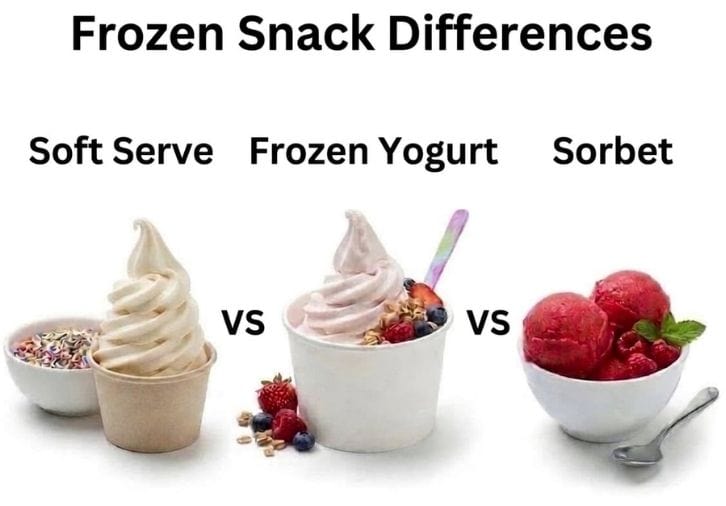
But they begin with different ingredients, they’re built in different ways, and they suit different eaters.
Once you know what goes into each one, I think choosing gets much easier.
Soft Serve: Milk, Sugar and a Lot of Air
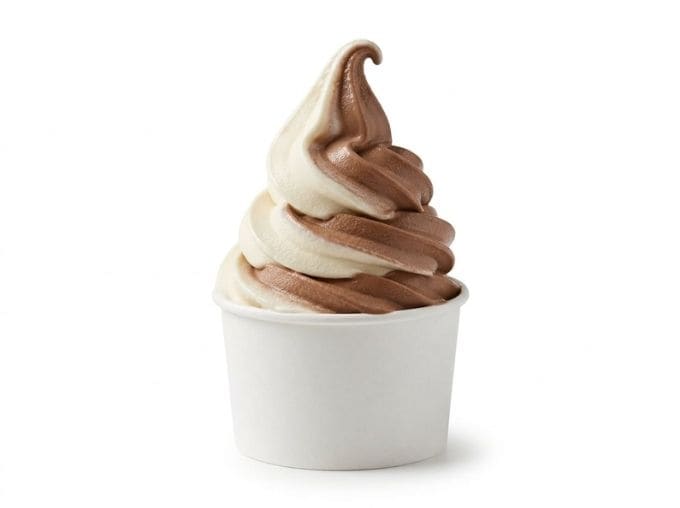
Soft serve starts as a liquid mix of milk, cream or milk solids and sugar, plus small amounts of stabilizers and emulsifiers that keep it smooth.
That mix is frozen in a machine that whips it as it chills, so the finished swirl you get is part ice cream and part foam.
I see two details that set it apart from the ice cream you scoop at home.
It usually has less milkfat.
In the United States, anything labeled “ice cream” needs at least 10 percent milkfat, and many soft serve mixes come in well under that.
It’s also served warmer, which keeps it soft enough to flow from a spout.
Then there’s the air.
Dessert makers call it overrun, the extra volume that air adds as the mix is whipped.
More air means a lighter texture and fewer calories per spoonful for you, but also a thinner, less rich taste.
Best for: people who want that classic creamy flavor without the heaviness of a premium pint.
Frozen Yogurt: Dairy with Cultures
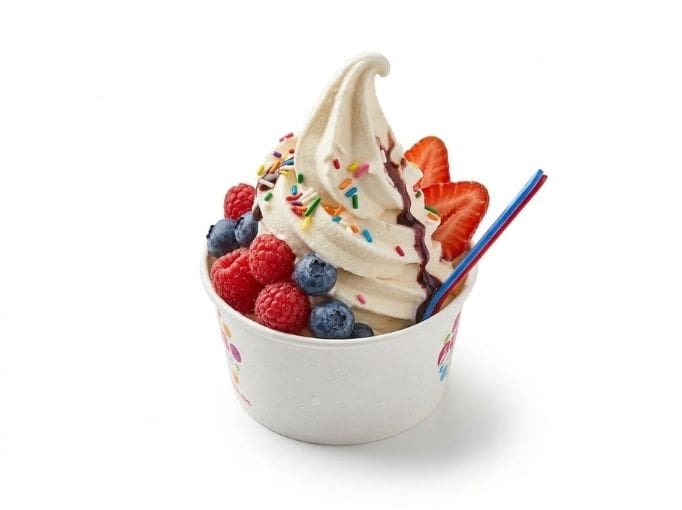
Frozen yogurt uses a similar base of milk and sugar, but part of the dairy is cultured yogurt, which is where the tang you taste comes from.
The bacteria traditionally used to make yogurt, Lactobacillus bulgaricus and Streptococcus thermophilus, turn some of the milk sugar into lactic acid.
Here’s the part I notice most menus leave out:
Not every frozen yogurt still contains living cultures by the time it reaches you, because some products are heat treated after culturing.
If live cultures are the reason you order it, look for a “live and active cultures” statement on the label or ask at the counter.
Frozen yogurt isn’t automatically the lighter choice, either.
Many recipes add extra sugar to balance the sourness.
Fat is often lower than in ice cream, but you’ll find sugar can be similar or even higher.
Best for: fans of a bright, tart flavor, and anyone who simply prefers the taste of cultured dairy.
Sorbet: Fruit, Sugar and Water
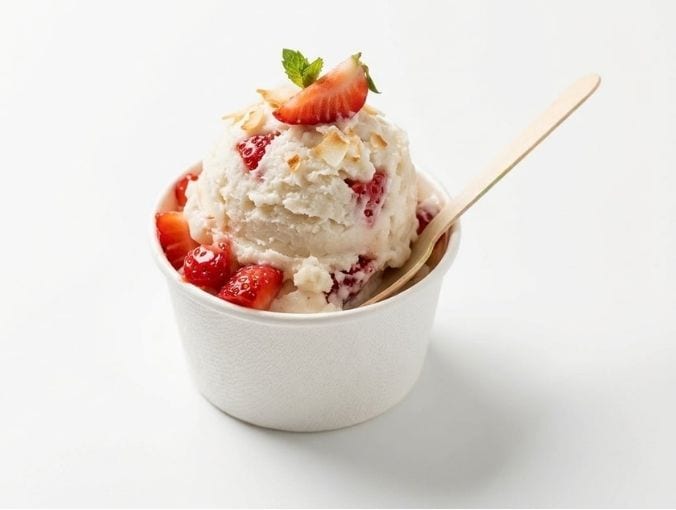
Sorbet skips dairy entirely.
A classic sorbet is fruit puree or juice, sugar and water, churned until it freezes into a smooth ice.
Some recipes add lemon juice to sharpen the fruit or a stabilizer to keep the texture even.
Without milkfat, sorbet depends on sugar to stay soft.
Sugar lowers the freezing point of water, which keeps sorbet from setting into a solid block.
That’s why sorbet can taste so intensely sweet and why its fruit flavor comes through so clearly.
One common mix-up I see? Sherbet isn’t sorbet.
Sherbet contains a small amount of dairy, so it’s not a dairy-free pick for you.
Best for: dairy-free and plant-based eaters, and anyone who wants a clean, fruity finish after a heavy meal.
If you’re strictly vegan, I’d check the ingredients, since a few recipes include honey or are made on equipment shared with dairy.
A Quick Comparison
- Soft serve: made with dairy, no cultures, a milk-and-cream flavor and a light, creamy texture.
- Frozen yogurt: made with dairy, cultured (sometimes still live), a tangy yogurt flavor and a creamy, tart texture.
- Sorbet: no dairy and no cultures, a fruit flavor and a smooth, slightly icy texture.
How to Choose
A few questions can help you narrow it down fast:
- Avoiding dairy? Sorbet is your clear pick. Soft serve and frozen yogurt are both dairy based.
- Want live cultures? Choose frozen yogurt and check for the live and active cultures statement.
- Watching sugar? I’d compare labels instead of assuming. Syrups and candy toppings can add more sugar than the base itself.
- Craving richness? Soft serve gives you the most classic, creamy taste of the three.
Where You Can Find All Three in One Spot
Not long ago, finding soft serve, frozen yogurt and sorbet in one place usually meant you had to visit a dedicated dessert shop.
I’ve noticed that’s starting to change.
Some robotic vending machines now make each cup to order and can be stocked from a library of about 100 ice creams, frozen yogurts and sorbets, with two flavors plus a mix of the two available at a time.
Sweet Robo, a U.S. company, builds machines like these for hotels, family entertainment centers and break areas.
Whatever lands in your cup, the approach I use is the same.
Read the label, decide what you want from your dessert, and then enjoy every spoonful.

- Soft Serve vs Frozen Yogurt vs Sorbet: What Is Actually in Your Cup? - October 23, 2026
- Balsamic Glaze vs. Balsamic Reduction vs. Aged Balsamic: Why Each One Matters in Your Kitchen - October 21, 2026
- Bojangles Coleslaw Recipe - April 19, 2026
